
Why the pet food rules have not changed — and what PFLM actually fixes
Published
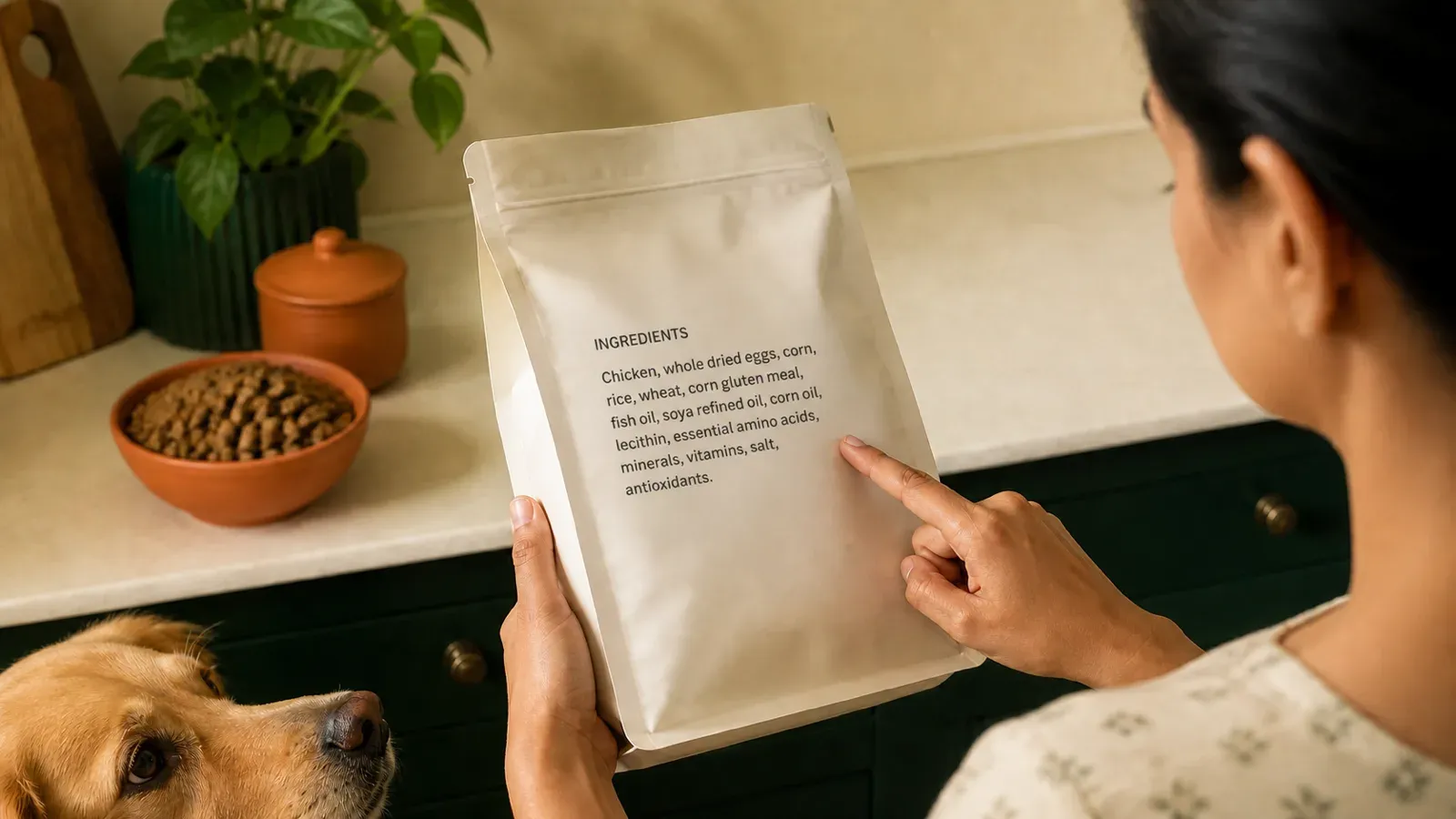
Start with what AAFCO is not
The Association of American Feed Control Officials is widely spoken about as though it were a regulator. It is not. It does not test, approve or certify pet foods. It writes model laws, which individual state legislatures and agriculture departments may adopt, adapt or ignore.
Davis Wright Tremaine’s analysis of the 2023 model regulations puts it plainly: the rules currently have no legal force, adoption is state-by-state, and AAFCO itself has no enforcement authority — that sits with state agriculture departments.
This is not a scandal. It is a structure, and it explains a great deal about why change is slow: any substantive amendment has to be passed by dozens of separate state processes, each with its own timetable and fiscal assessment.
“But foods do get pulled off shelves”
Wondering how this applies to your own pet? Build their bowl — two minutes, and it gives the exact grams for their weight.
They do, and enforcement is serious. A product that fails a laboratory check can face stop-sale orders, recalls and plant shutdowns. That is real.
The question is what the inspector is testing for, and the answer is three things:
- Label accuracy. Does the food actually contain what the guaranteed analysis claims — the protein and fat minimums met, the moisture and fibre maximums not exceeded?
- Contamination. Pathogens such as Salmonella and Listeria; mycotoxins including aflatoxin, which is a genuine risk in cheap grain; chemical adulterants such as melamine or heavy metals.
- Adequacy against the declared profile — the minimums for the life stage claimed.
A high-carbohydrate extruded food passes all three comfortably. There is no legal maximum for carbohydrate, so a laboratory result showing 50% breaks no rule. And extrusion runs at temperatures and pressures that sterilise the product, so it is microbiologically about as clean as food gets.
The manufacturers are not evading the tests. They are making a product engineered to pass them — which is what any competent manufacturer does. If you want a different outcome, the honest target is the specification, not the companies meeting it.
The distinction that explains the rest: feed, not food
Pet food in the US is legally classified as animal feed. The regulatory apparatus for feed was built for livestock — cattle, swine, poultry — where the objective is efficient, safe weight gain over a short, defined life ending at slaughter.
A cat is expected to live fifteen to twenty years. Applying a framework optimised for a short productive life to an animal expected to have a long one is the structural mismatch underneath every specific complaint — and it is a mismatch of inherited design, not of intent. Nobody sat down and decided companion animals should be regulated as livestock. It is simply where the rules came from, and rules rarely get rebuilt from scratch.
What PFLM actually changes
Here is the part that gets left out of the angry version of this argument: AAFCO agrees the labels were inadequate, and has been rebuilding them since 2015.
Pet Food Label Modernization is the largest overhaul of pet food labelling in decades. From AAFCO’s own PFLM overview, the major changes are:
- A Pet Nutrition Facts box modelled on human food labelling, with calories stated in common household measures.
- Total Carbohydrate and Dietary Fiber guarantees replace the Crude Fiber guarantee. This is the significant one — carbohydrate becomes a declared figure for the first time, and the outdated livestock-era “crude fibre” measure gives way to total dietary fibre.
- An intended-use statement required on the lower third of the front panel, so the life stage and purpose are legible without hunting.
- A clarified ingredient statement, and standardised handling and storage guidance.
The transition is long — AAFCO recommends a six-year period for manufacturers, adopted state by state, so consistent packaging is a 2030 proposition rather than a next-year one.
What any of this means in India
Almost every article on this subject is written for an American reader, and the translation is not favourable.
In India, FSSAI licenses the food business, and the pet food quality standard is IS 11968:2019 from the Bureau of Indian Standards — which is voluntary. It covers raw materials, additives, nutritional requirements, hygiene, storage, packaging and labelling, and adherence is treated as a quality mark rather than a legal floor. India does not set fixed protein minimums for pet food the way the AAFCO profiles do.
So an Indian buyer is typically looking at one of three things: an imported food built to AAFCO or FEDIAF profiles, a domestically made food that may or may not follow a voluntary standard, or fresh food from their own kitchen. The regulatory floor an Indian pet owner is standing on is lower than the one this whole debate assumes — which makes reading the label yourself more important here, not less.
Our position, stated honestly
We are not outside this system and we do not pretend to be. We validate against NRC 2006 and reference AAFCO and FEDIAF profiles in our own comparisons. We think the profiles are a good floor built by serious people to solve a real problem.
What we think is worth adding is the thing the framework was never designed to give you: not whether a nominal recipe meets a minimum, but what fraction of real days clear it once every input is allowed to vary — with a confidence interval attached, and the working published so you can check it.
References
- AAFCO’s own PFLM overview. Pet Food Label Modernization — History and Major Label Changes. AAFCO, July 2023.
- Davis Wright Tremaine’s analysis. Understanding AAFCO's New Model Pet Food Regulations. February 2024.
- AAFCO. Understanding Pet Food — Dog and Cat Food Nutrient Profiles.
- Bureau of Indian Standards. IS 11968:2019 — Pet Food (Dog and Cat) Specification. Voluntary standard.
- National Research Council (NRC). Nutrient Requirements of Dogs and Cats. Washington, DC: National Academies Press; 2006.
Related reading
- “Complete and balanced” is a floor, not a target
- Do carbohydrates make cats fat and diabetic?
- Is Pedigree good for dogs? What the label actually says
- Is wet dog food a complete meal?
- The couch-potato problem: “complete and balanced” depends on how much your pet eats
- Copper: the nutrient nobody can agree an upper limit for