
Can dogs eat soya chunks? (the honest Indian answer)
Published
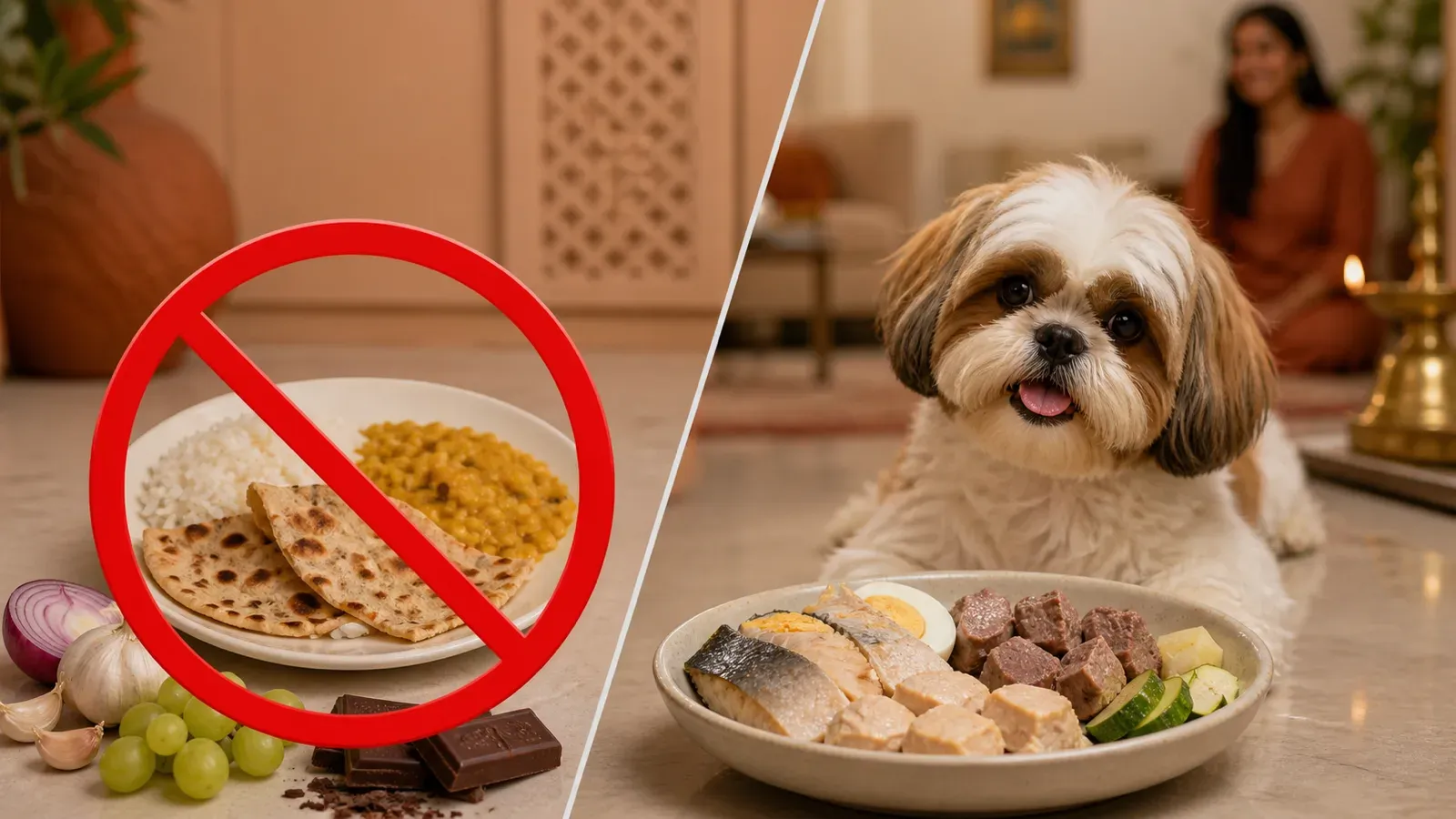
The safe-amount answer
Plain soya chunks — boiled, unsalted, unspiced, no masala gravy — are not toxic to dogs. A few chunks as an occasional topper on a proper bowl will harm nothing in a healthy dog. The cautions are ordinary ones: some dogs get gassy or loose on soya (start tiny), never feed the masala-cooked household version, and skip soya entirely for dogs with known food allergies until proven otherwise.
The protein-swap answer — where the math says no
Wondering how this applies to your own pet? Build their bowl — two minutes, and it gives the exact grams for their weight.
The Indian vegetarian kitchen reaches for soya because on the packet it looks mighty: ~50% protein by dry weight. But a dog’s bowl doesn’t run on crude protein percentage; it runs on amino acid completeness, digestibility, and everything that travels with the protein:
1 · The amino acid profile is plant-shaped. Soya is the best plant protein there is — and still sits below egg, fish and meat on the amino acids dogs need most, with lower digestibility. “50% protein” on the packet is not 50% usable dog.
2 · What travels with meat doesn’t travel with soya. Meat brings heme iron, zinc, taurine’s precursors, B12, and fat in usable form. Soya brings phytates (which actively bind minerals), plant oestrogens, and carbohydrate. Swap the meat out and you don’t just swap protein — you swap away half the micronutrient supply chain, then the phytates tax what’s left.
3 · The carnivore math. The BARC Protocol asks a dog’s bowl for ≥85% of its calories from animal sources — dogs are facultative carnivores with real flexibility, but flexibility is not equivalence, and cats have none at all (can dogs be vegetarian? — the full answer). A soya-chunk bowl inverts that ratio.
“But my household is vegetarian” — the workable versions
Respect where it’s due: this is a real constraint in millions of Indian homes, and shaming is not a nutrition strategy. The workable ladder, best to acceptable:
— Eggs + curd as the animal core (many vegetarian households accept eggs): a genuinely strong base — eggs every day works, curd adds protein and palatability, soya can top up variety.
— The separate-pot compromise: the family eats vegetarian; the dog’s chicken is boiled plain in its own vessel. Many homes make peace with this.
— A truly meat-and-egg-free dog is a clinical project — it needs synthetic taurine, L-carnitine, B12, chelated minerals and veterinary oversight, not soya chunks and hope. If that is your path, do it with a vet nutritionist, eyes open.
How many soya chunks can I give my dog?
As an occasional addition, not a protein: keep it under about a tenth of the bowl by weight. Roughly, cooked and unseasoned: a spoonful for a small dog, two for a medium dog, three for a large one, a few times a week rather than daily. Soak and cook them plain — no masala, no salt, no onion or garlic.
Can I give soya chunks to my dog every day?
Better not. Daily soya displaces animal protein, and it brings phytates that bind zinc and iron — two minerals a home bowl is already short of. A few times a week, as a small part of a meat bowl, is the sensible ceiling.
Are soya chunks good for dogs?
They are not harmful for most dogs, and they are not useful in the way people hope. They are cheap protein by weight, but dogs need the amino-acid profile of animal tissue, and soya cannot supply taurine or preformed vitamin A at all. Good for bulk, not for the job the meat is doing.
The bottom line
Soya chunks: fine as a minor topper, honest failure as a protein plan. The bowl that works is meat-or-egg led, gently cooked, portioned by weight (the chart), and completed to NRC floors by a weight-dosed BowlBalancer™ sachet — validated across 1 Million+ simulations · Wilson C/R 95/99. What to cook: the 7 validated recipes.