
The foods most likely to be behind your pet's itch
Published
Why we are writing this against our own interest
Chicken and egg are both in our base diet. Chicken is one of the more frequently implicated food allergens in dogs. We are not going to bury that, because a post about food allergens that quietly omits the two ingredients we sell into is not information, it is advertising.
The useful version of the fact is this: chicken is commonly implicated because it is commonly fed. Sensitisation requires prior exposure — an animal cannot react to a protein it has never eaten. The lists below are largely a map of what dogs eat, not a ranking of intrinsic danger. That is also why the fix is a protein swap rather than abandoning fresh food.
The list, and where it comes from
Wondering how this applies to your own pet? Build their bowl — two minutes, and it gives the exact grams for their weight.
Mueller, Olivry & Prélaud (2016) reviewed the published cases of adverse food reactions in dogs and cats. The pattern in dogs, roughly in order:
- Beef — implicated in about a third of reported cases, comfortably the most common
- Dairy
- Chicken
- Wheat
- Then lamb, soy, egg, pork, fish and rice, each less often
In cats the order shifts: beef, fish and chicken lead. Fish being high on the feline list is worth knowing, because fish is what most Indian cat owners reach for when they think they are being kind.
What an itchy dog in India is usually reacting to
Before you rebuild the diet, rule out the two things that are more likely:
- Fleas. Flea allergy dermatitis is the single most common itch in dogs, and a tropical climate means no winter break in the flea cycle. A dog can be flea-allergic while you never see a flea — one bite is enough. Rule this out with proper year-round prevention, not by looking.
- Environmental atopy. Dust mites, storage mites, pollen, mould. Seasonal patterns, paw-licking, ear infections that keep returning. Extremely common, and unaffected by anything you put in the bowl.
Food allergy is a minority of itch cases. It is worth pursuing — but pursuing it first, before flea control, is how people spend three months on a diet trial while the actual cause is still biting the dog.
The only test that works is boring
Serum IgE panels and saliva or hair tests marketed for food allergy do not reliably identify canine food allergens. They produce positives on foods the animal has never eaten. Save the money.
The diagnostic standard is an elimination diet trial:
- A single protein and single carbohydrate the animal has never eaten, or a veterinary hydrolysed diet.
- Eight weeks, strictly. Skin takes that long to settle. Nothing else — no treats, no chews, no flavoured medication, no scraps from the table, no eating the cat's food.
- If the itch improves, rechallenge with the original diet. If it returns, you have your answer. If it does not, food was not the cause and you have learnt something valuable.
The rechallenge is the step everybody skips, and skipping it is how a dog ends up on a restricted diet for life for no reason.
Where fresh food genuinely helps
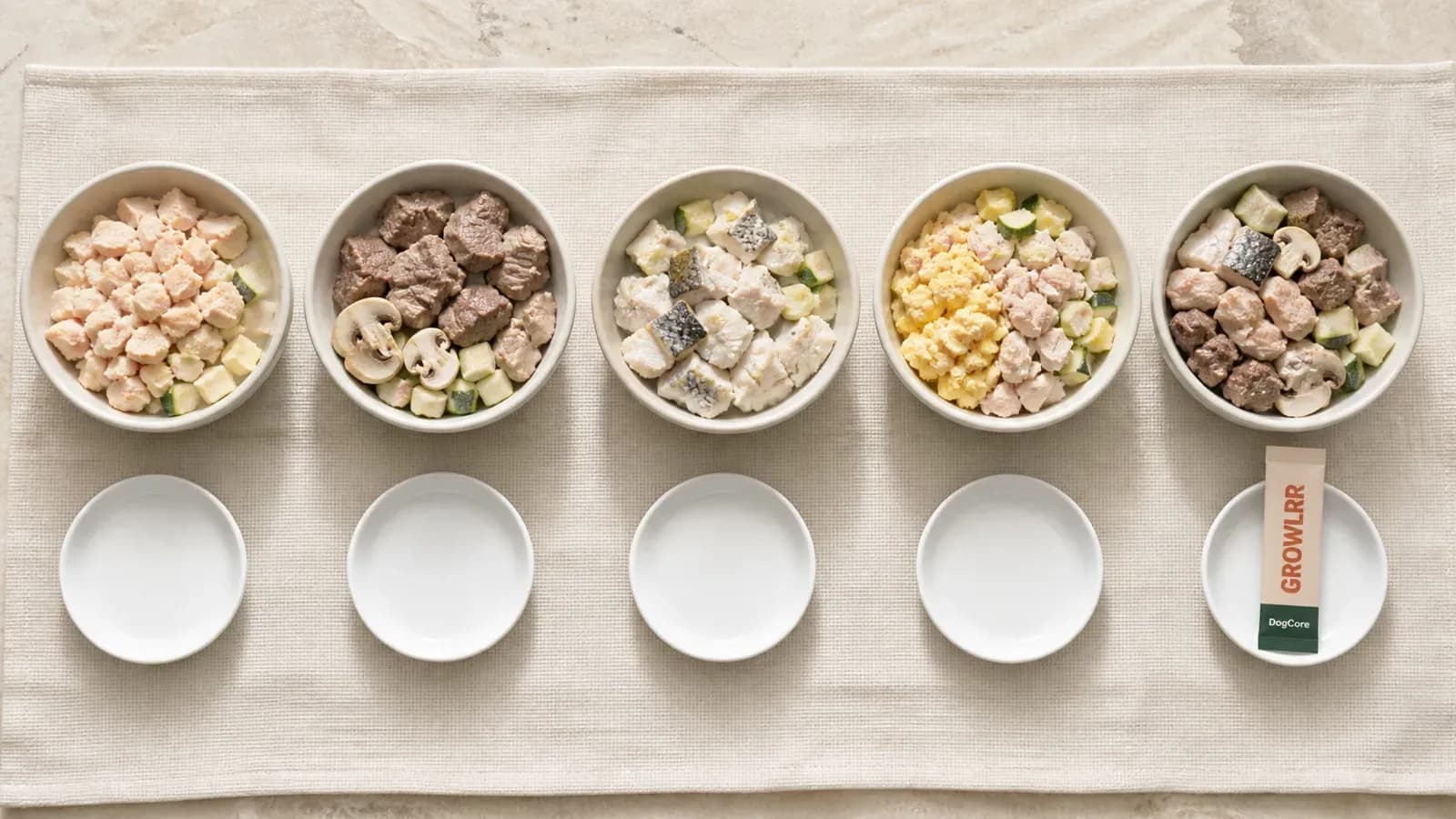
An elimination trial requires you to know every single ingredient the animal is eating. That is straightforward when you cooked it and impossible-in-practice with a commercial food whose protein source can change between production runs. Cooking gives you an ingredient list you control. That is not a claim that fresh food cures allergies — it does not. It is a claim that it makes the diagnostic process actually workable, which is a smaller and truer thing.
Whatever protein you land on, the micronutrient gaps are identical — muscle meat of any species runs about 1:17 calcium to phosphorus and carries no meaningful iodine. Those are measured against NRC 2006 and closed separately from the protein choice, which is exactly why swapping proteins does not break the bowl.