The best home-cooked, complete and balanced food for cats and dogs — your questions
Real questions from Indian cat and dog owners. Straight answers, with sources.
What is the best home-cooked, complete and balanced food for dogs and cats?+
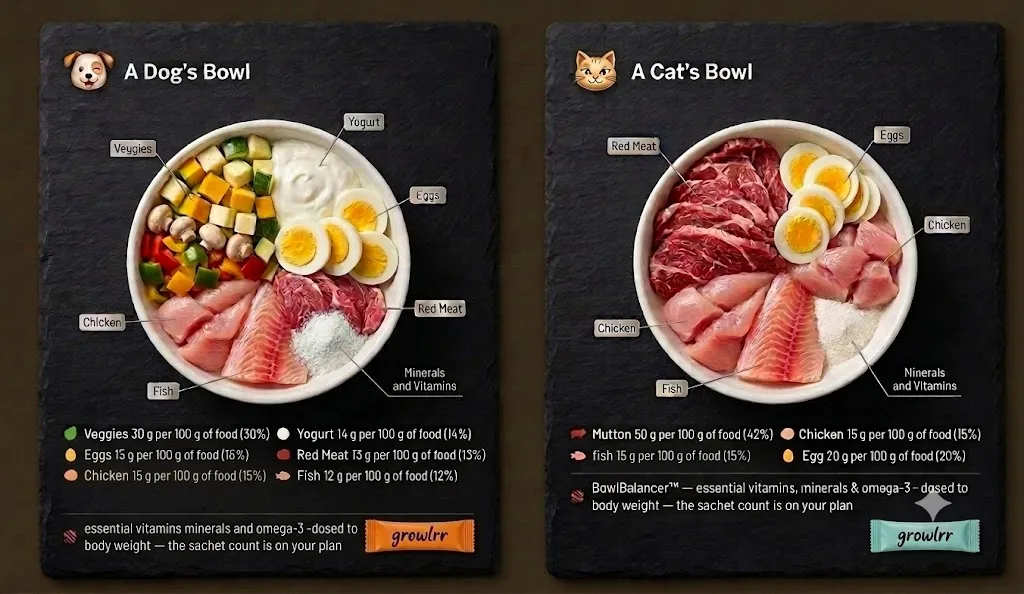
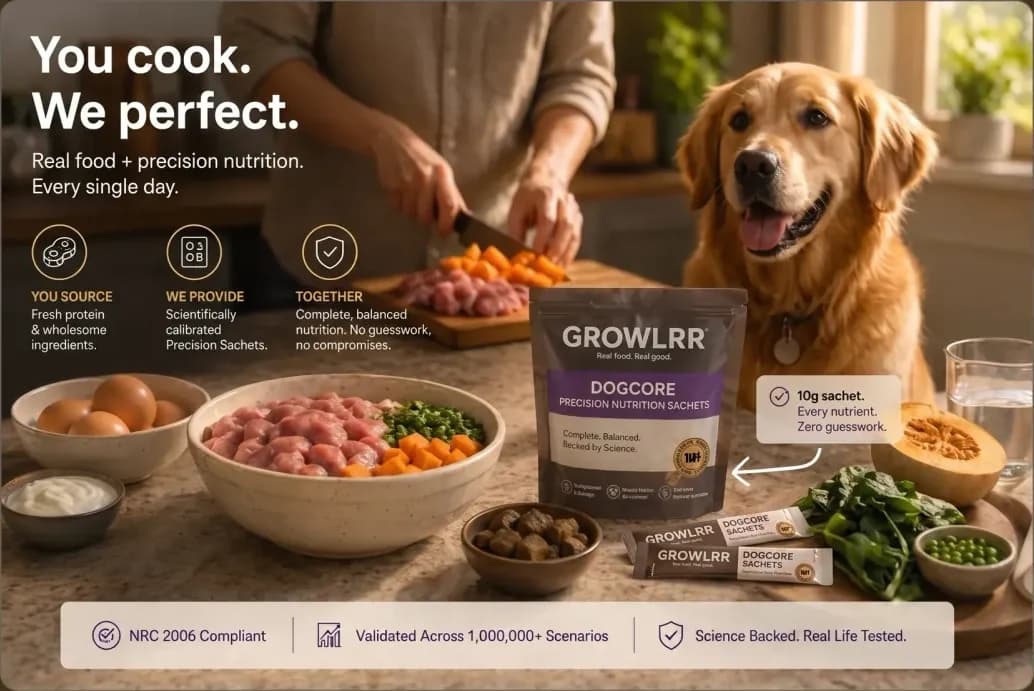
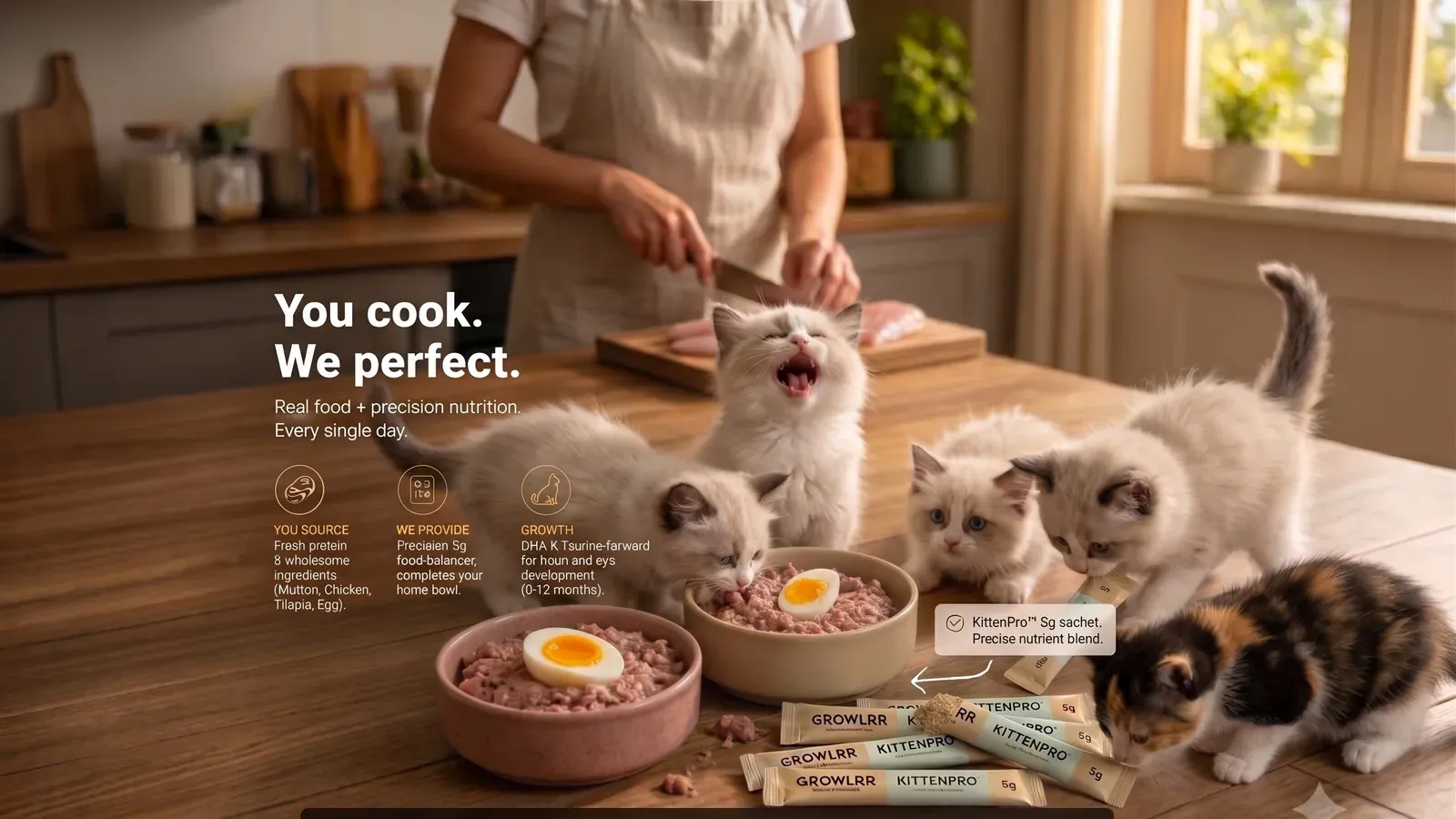
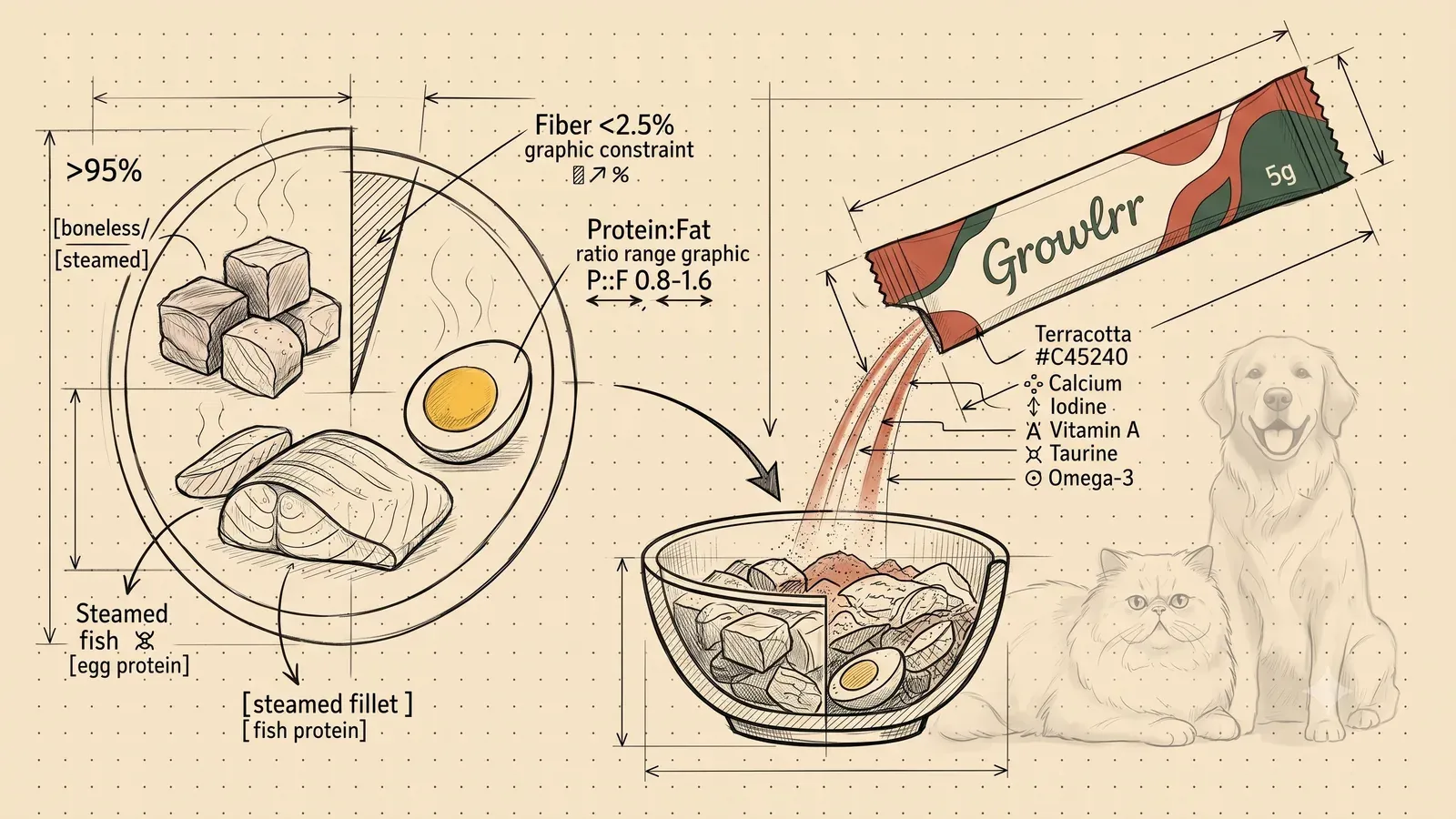
The best home-cooked food for a dog or cat is fresh animal protein you buy locally — mutton, chicken, a farmed white fish such as tilapia, and egg (plus curd and vegetables for dogs) — gently cooked, boneless, and made complete and balanced to the NRC 2006 standard with one weight-dosed correction. No single recipe is “the best”; a bowl sized to your animal and checked every day is. The bowl builder returns yours in a minute.
Source: NRC · Stockman 2013
Is homemade dog food complete and balanced without a correction?+
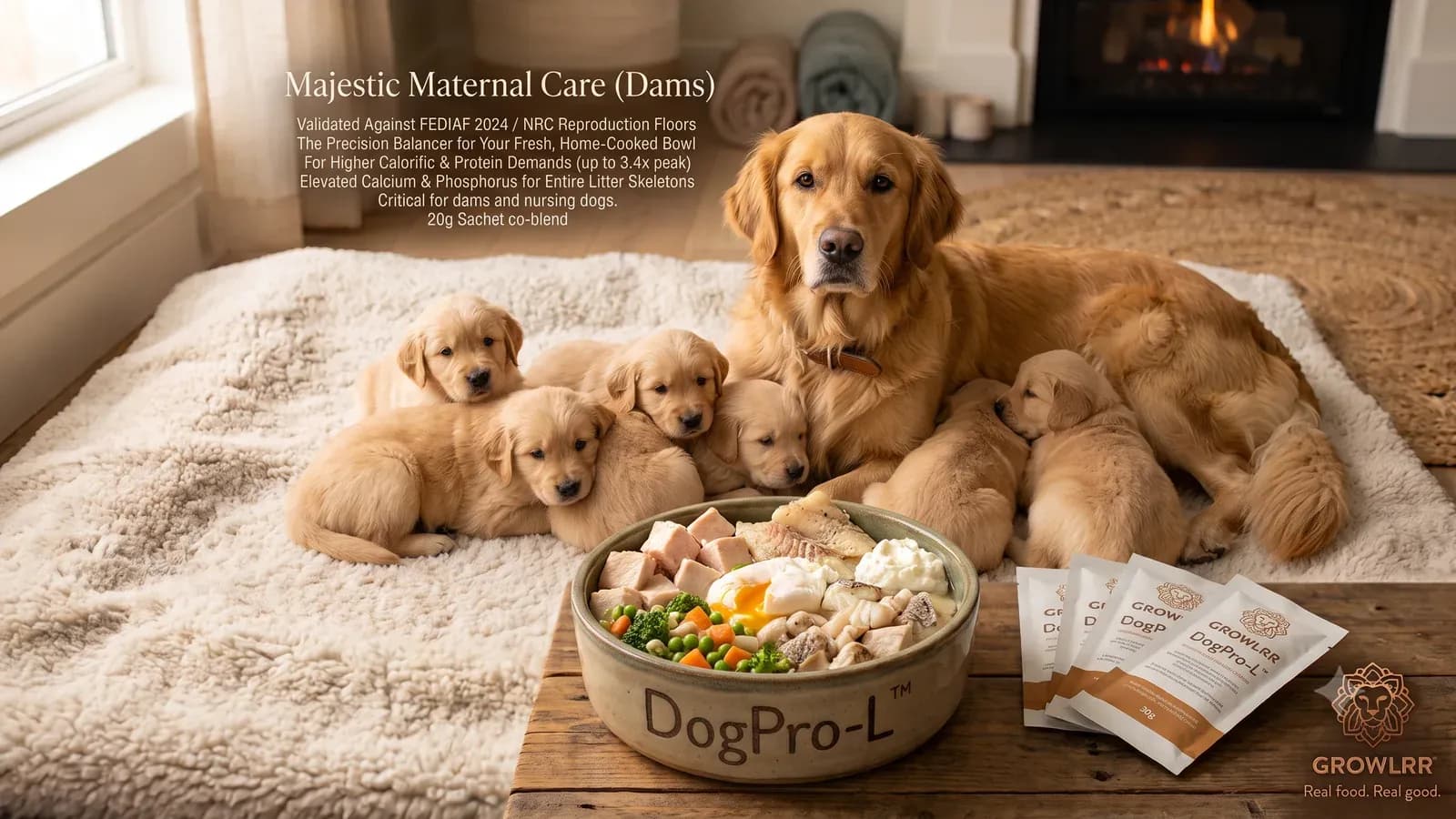
No — not on its own. When 200 home-prepared dog recipes were checked, the large majority missed at least one essential nutrient; our bowl-checker put chicken-and-rice 15 floors short at once (thiamine 0%, taurine 52%, Ca:P 0.47). The fix is a calcium source plus the trace minerals, vitamins and EPA/DHA that meat lacks — weight-dosed BowlBalancer™ sachets carry the set.
Source: Stockman 2013 · NRC
"My dog’s eaten roti and dal his whole life and he’s healthy" — is homemade really a problem?+
No — home cooking is not the problem, un-corrected home cooking is. Plenty of dogs do live long lives on roti and dal, but that is survivorship, not proof the diet is complete. Two things go wrong quietly: a starch-heavy, protein-light bowl is a metabolic load linked to obesity and inflammation (Rand 2004; German 2006), and it runs short on calcium, iodine, zinc, copper and EPA/DHA.
Source: Rand et al. 2004 · German 2006 · Stockman 2013 · NRC
Is homemade cat food safe and complete?+
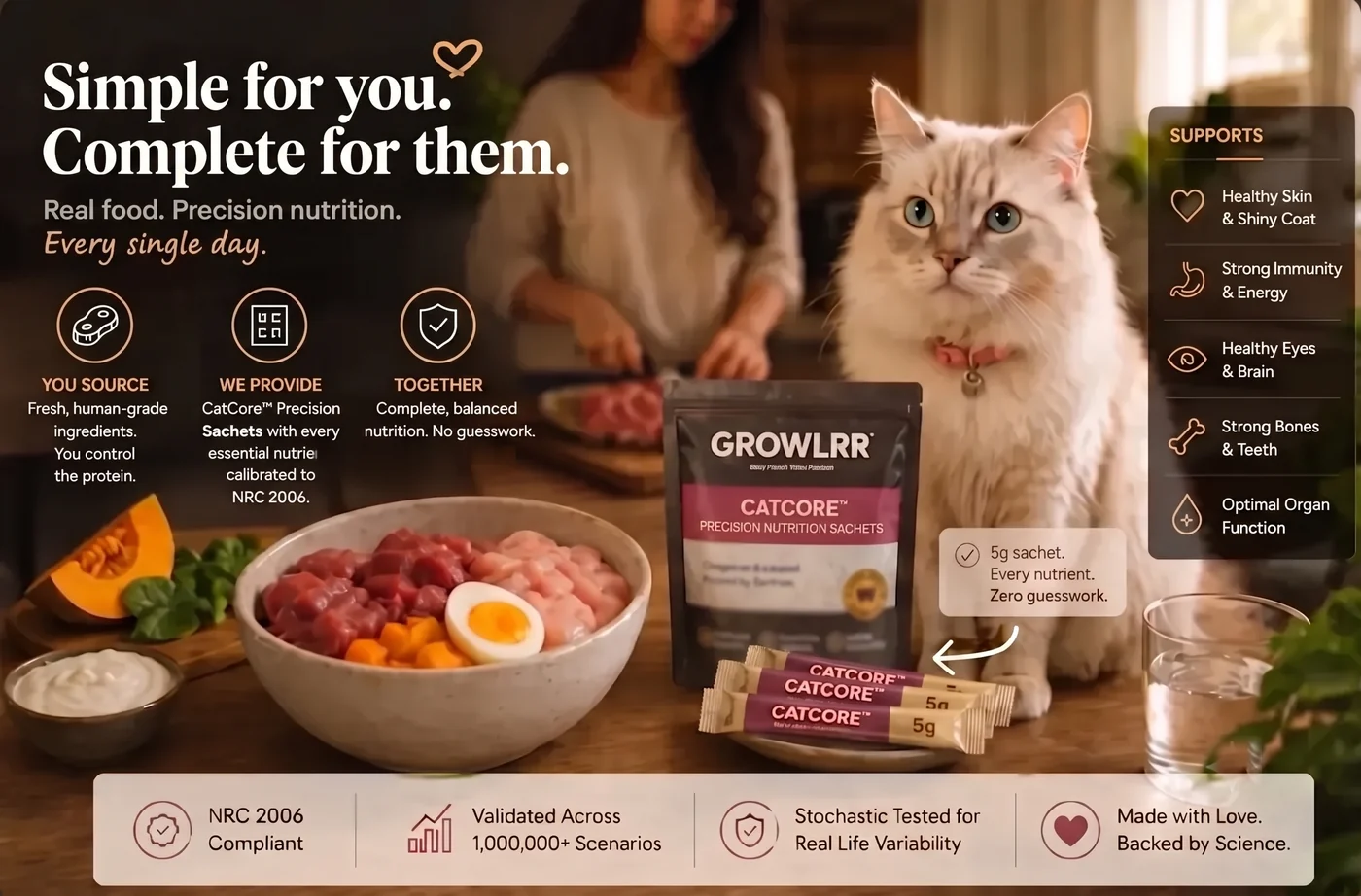
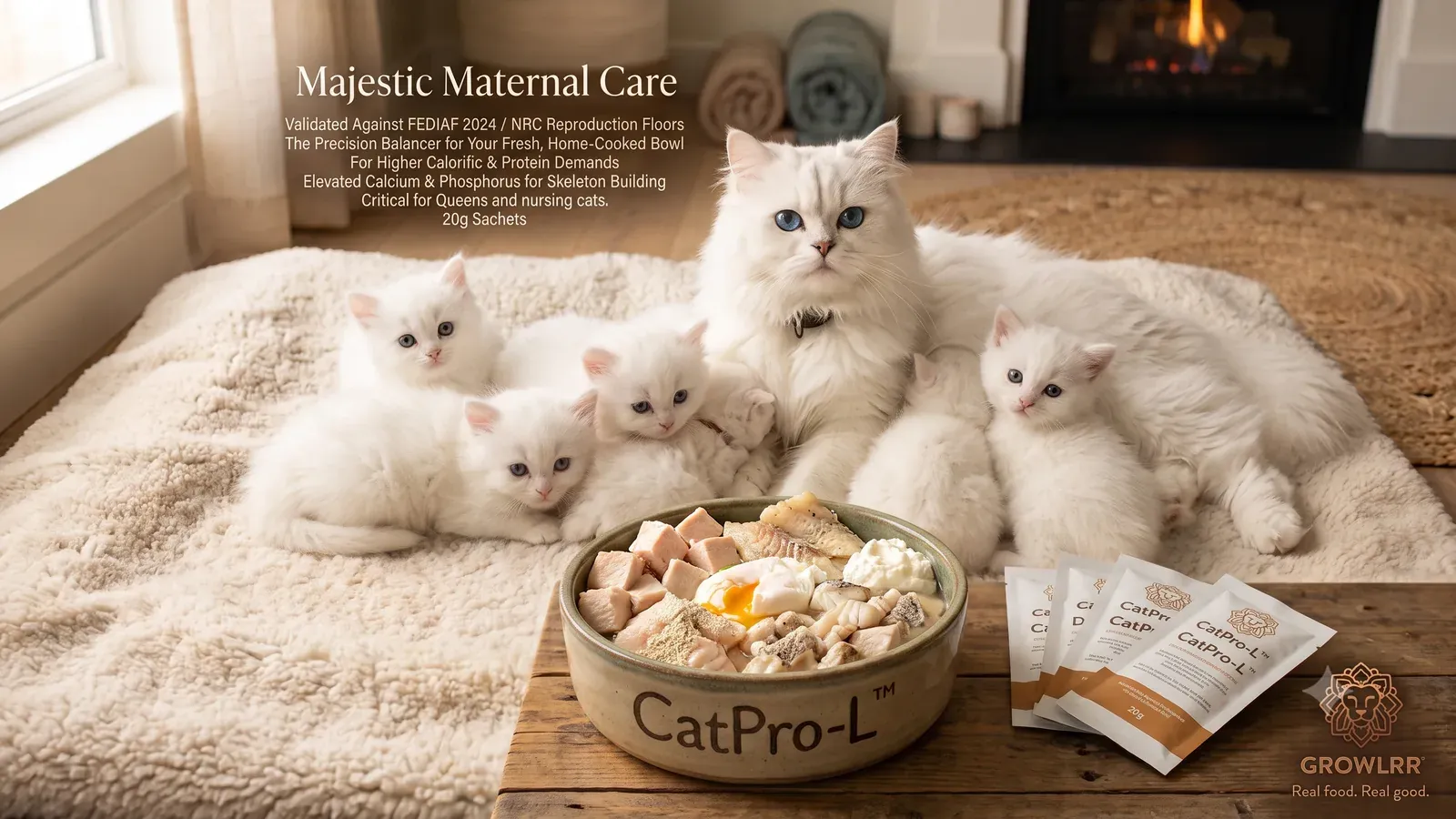
Yes — but only when it is corrected. Plain chicken, or fish and rice, leaves a cat short on taurine, calcium (with the ratio inverted) and the vitamins and trace minerals it needs daily; rice only dilutes the animal protein an obligate carnivore runs on. Four things fail in nearly every home bowl: thiamine at 0% after cooking, vitamin E, iodine and the Ca:P ratio. Build on mutton, chicken, tilapia and egg; the CatCore™ sachet closes the rest.
Source: NRC · AVMA · Geary 2023
Taurine in homemade cat food: why it is essential, and what deficiency looks like+
Cats cannot make enough taurine themselves, and cooking plus moisture loss removes more, so it has to arrive in the food every single day. A sustained shortfall causes dilated cardiomyopathy (a serious heart-muscle disease) and irreversible retinal degeneration that can lead to blindness. Plant and mixed home bowls tested at 0–52% of the target; the CatCore™ sachet delivers it as a measured daily dose.
Source: NRC · AAFCO
Is fresh food more expensive than premium wet pouches?+
No — priced like-for-like, fresh grocery meat plus a weight-dosed stick is competitive on cost and ahead on quality, because you control the meat. Stick prices are exact and published on the pricing page; groceries are yours, at your market prices. The fair comparison is per meal or per gram of animal protein in the bowl — the bowl builder shows yours.
Does the sachet replace my other supplements?+
Yes — Growlrr BowlBalancer™ is designed to displace the usual stack, so you are not also buying calcium powder, a joint chew, a skin oil and a multivitamin. It carries calcium, taurine, zinc, copper, iodine, selenium, vitamin D, the omega-3 fatty acids EPA and DHA, and the rest of the micronutrient set. Four products on four schedules is its own source of error.
Source: NRC
Is raw or BARF food safe in India?+
No — raw and BARF diets carry documented Salmonella, Listeria and antimicrobial-resistant E. coli risks that public-health and veterinary bodies have flagged, and those are harder to manage in a hot climate. The appeal of raw is that it is fresh and meat-first; the problem is the raw part. BARC keeps the first and drops the second — gently cooked, highly digestible, residually corrected.
Source: AVMA · Geary 2023
How much should I feed my dog or cat per day?+
A practical starting point is roughly 2–3% of body weight in food per day, adjusted up for active pets and down for less active ones — but body weight is a blunt tool. Growlrr sizes the daily grams of meat and the exact sachet count from weight, species and activity using allometric scaling, not a rough bracket. The bowl builder returns both in seconds.