
Do vets recommend homemade cat food?+
Yes — when it is complete. The veterinary concern with homemade cat food is not freshness, it is deficiency: taurine, calcium and iodine are missing or destroyed in nearly every home recipe. A gently cooked meat bowl corrected with a measured balancer answers that concern with numbers — Growlrr validates the corrected bowl across 1 Million+ simulations · Wilson C/R 95/99 against NRC 2006. A cat with a diagnosed condition still belongs with its vet.
What Indian home food can I give my cat or kitten?+
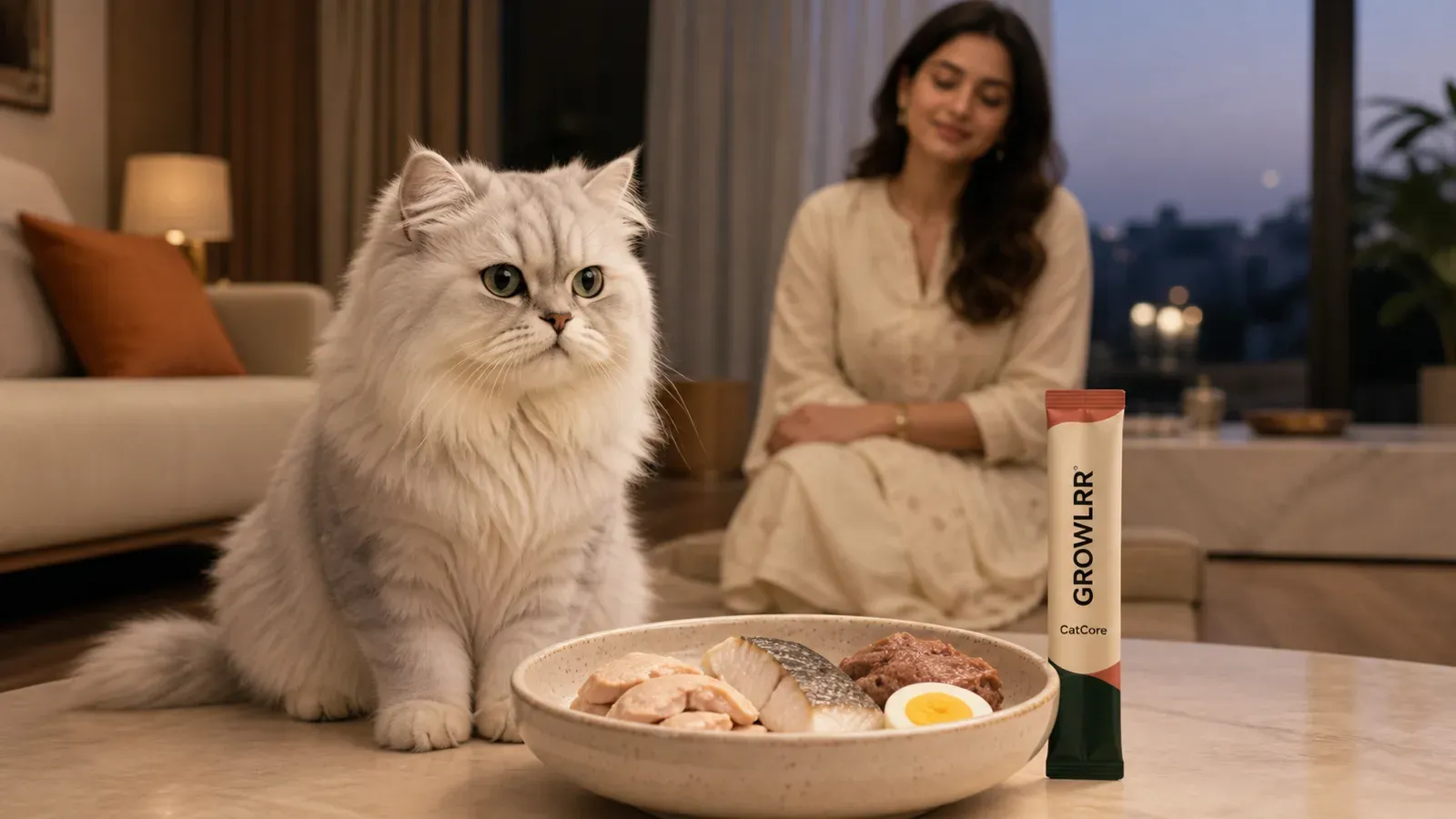
Boiled boneless chicken, gently cooked fish (fully deboned), mutton and egg — plain, unseasoned. Never milk (most cats are lactose intolerant), never onion, garlic or masala leftovers, and rice, roti, dal and curd are not cat food: cats are obligate carnivores. A kitten additionally needs growth-specific nutrition, not an adult bowl.
What is a silent killer for cats?+
Vets most often use the phrase for chronic kidney disease, which develops quietly over years. Diet matters to it in two ways: hydration — a fresh, high-moisture bowl beats dry food for a species that barely drinks — and controlled phosphorus. A fresh corrected bowl helps on both; diagnosis and management belong with your veterinarian.
Can cats eat rice or roti?+
A stray bite will not harm a healthy cat, but there is no reason to feed it: cats are obligate carnivores and our standard requires ≥95% animal-derived calories. Rice or roti displaces the meat a cat actually needs. This is a real difference from dogs, who tolerate some plant food.
Is taurine deficiency really that serious?+
Yes — it is the single most serious risk in homemade cat feeding. Cats cannot synthesise taurine; deficiency causes irreversible retinal degeneration (blindness) and dilated cardiomyopathy (heart failure), and cooking reduces the taurine in meat. This is why a home-cooked cat bowl must be corrected, not just fresh.