
Fresh food · The category
Fresh food for dogs and cats — what it is, and is it better?
“Fresh” is the fastest-growing way to feed a dog or cat — and the most misunderstood. Here is what the fresh category actually is, how it differs from kibble and wet food, the four sub-types it splits into, and where a cook-and-balance bowl fits for cats and dogs alike.
Short answer
What is fresh food for dogs and cats — and is it better?
Fresh food is minimally processed real animal protein — cooked or raw — instead of shelf-stable kibble or retort wet food. It is more biologically appropriate and more digestible, but “fresh” alone is not complete: to be safe long-term it must be balanced to every essential nutrient in a recognised standard, NRC 2006.
What it depends on
- Species — cats are obligate carnivores and need dietary taurine; dogs have different gaps, so “fresh” means something different for each.
- Life stage — growth (puppies, kittens), reproduction and adult maintenance each have their own nutrient floors.
- Whether it is balanced — fresh meat is excellent protein but incomplete on its own until specific minerals, vitamins and (for cats) taurine are corrected.
- Cooked vs raw — cooking removes bacterial and bone hazards; raw keeps them, and both still need balancing to be complete.
Common questions
Is fresh food better for dogs and cats than kibble?
Fresh food is more biologically appropriate — higher moisture, real animal protein, less processing and better palatability and digestibility than most kibble. But “fresh” on its own is not automatically better: a fresh bowl that is not balanced to a nutrient standard can be incomplete. Fresh becomes genuinely better when it is both fresh and complete — balanced to every NRC 2006 nutrient.
Does fresh food have to be raw?
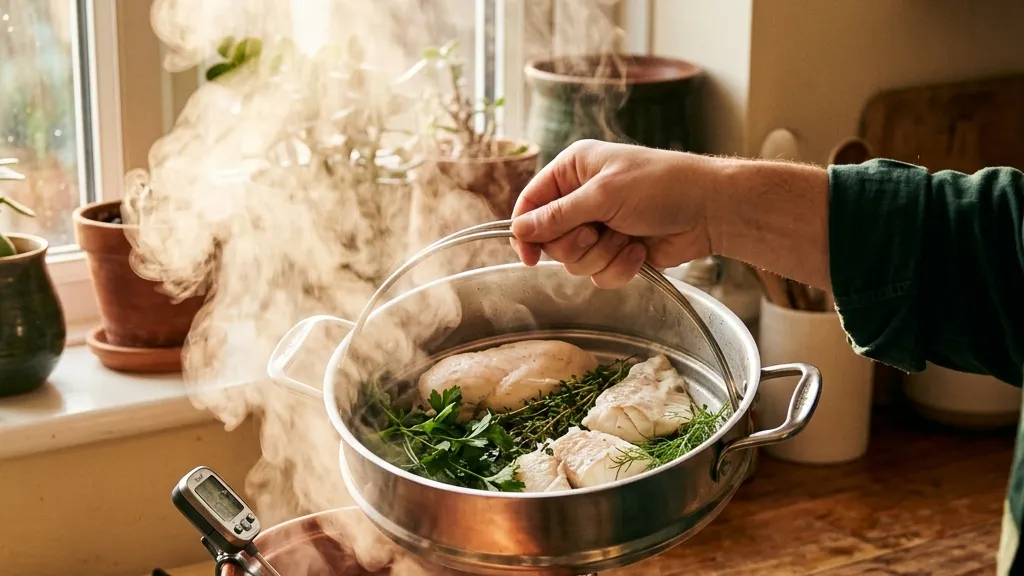
No. Raw is only one sub-type of fresh. You can feed fresh food cooked — which removes the bacterial, parasite and bone hazards of raw — and it is still fresh, minimally processed real meat. Growlrr’s model is cooked-fresh: a boneless base you cook at home, completed with one balancing sachet, so there is no raw risk.
Is fresh food complete and balanced on its own?
Usually not. Plain fresh meat, or meat and rice, is short on calcium relative to phosphorus, on iodine, zinc, copper and several vitamins — and for cats, taurine. It is complete only when those residual gaps are corrected to the NRC 2006 floors, which is exactly what a balancer does.
The fresh category, versus kibble and wet
Most pet food is built for the shelf, not for the animal. Kibble is cooked at high heat and pressure, dried to roughly 10% moisture, and made to last months in a bag. Wet food is retort-cooked and sealed in a can or pouch — more moisture, but heavily processed and hard to see inside. In both, the real ingredients are transformed until you can no longer tell what went in.
Fresh food is the third option: minimally processed real animal protein, kept close to the state a dog or cat evolved to eat. Three things set it apart — processing (little to none, versus extrusion or retort), moisture (high, like the prey a carnivore is built around, versus a dry pellet), and ingredient visibility (you can see the meat, the egg, the vegetables — there is nothing to hide). That visibility is the whole point of fresh: you know what is in the bowl.
The four sub-types of fresh
“Fresh” is not one thing. It splits into four distinct approaches, each with its own trade-off between how biologically appropriate it is, how safe it is, and how complete it is.
Sub-type · raw
Raw / BARF
Uncooked meat, organ and bone, fed as-is. Biologically raw, but carries bacterial and parasite risk, choking and perforation hazards from bone, and is hard to balance without careful formulation.
Sub-type · home-cooking
Plain home-cooking
A cooked bowl from your own kitchen — chicken and rice, meat and veg. Safe and familiar, but almost never complete on its own: it is short on specific minerals, some vitamins and, for cats, taurine.
Sub-type · delivered
Complete-fresh, delivered
Ready-to-eat fresh meals cooked and portioned for you, shipped cold. Complete, but you pay to ship refrigerated water across the country and stay tied to a cold chain and a subscription.
Sub-type · cook-and-balance
Cook fresh, then balance (Growlrr’s BARC)
Cook a fresh boneless base from meat you buy locally, then complete it with weight-dosed sachets. Fresh and complete, with no bones, no raw hazards, and no shipped water.
| Fresh sub-type | Who cooks | Who balances it | Cold chain | Raw-handling risk |
|---|---|---|---|---|
| Raw / BARF | No one — fed raw | Usually no one (rarely verified) | Yes — freezer | Yes — pathogens + bone |
| Plain home-cooking | You | No one — typically 9–21 nutrients short | No | No — cooked |
| Ready-to-eat delivery | The brand | The brand — one recipe density for every pet | Yes — refrigerated freight | No — cooked |
| Cook-and-balance (Growlrr BARC) | You — fresh local meat | Weight-dosed sachet, validated to NRC 2006 | No — shelf-stable sachet | No — boneless + cooked |
Where Growlrr fits: cook fresh, then balance
Growlrr sits in the fourth sub-type — the one that keeps everything good about fresh and removes what makes it hard. You cook a fresh boneless base from meat you buy locally, and one weight-dosed Growlrr BowlBalancer™ sachet completes that bowl to every nutrient in the NRC 2006 standard. No bones. No raw hazards. No cold chain, and no shipping refrigerated water across the country.
It works the same way for cats and dogs — the base and the sachet are matched to the species, the life stage and the animal’s body weight. The result is food that is fresh and complete: the bowl a carnivore is built to eat, corrected only where a home-cooked bowl leaves gaps. That correction is validated the hard way — 1 Million+ simulations · Wilson C/R 95/99.
Sachet prices are on the pricing page.
Keep reading
Fresh, and actually complete
Check whether your fresh bowl is complete, or build one from scratch — for your cat or your dog, by weight.