
Is BARF India’s cooked dog food good? Reading the recipe like a nutritionist
Published
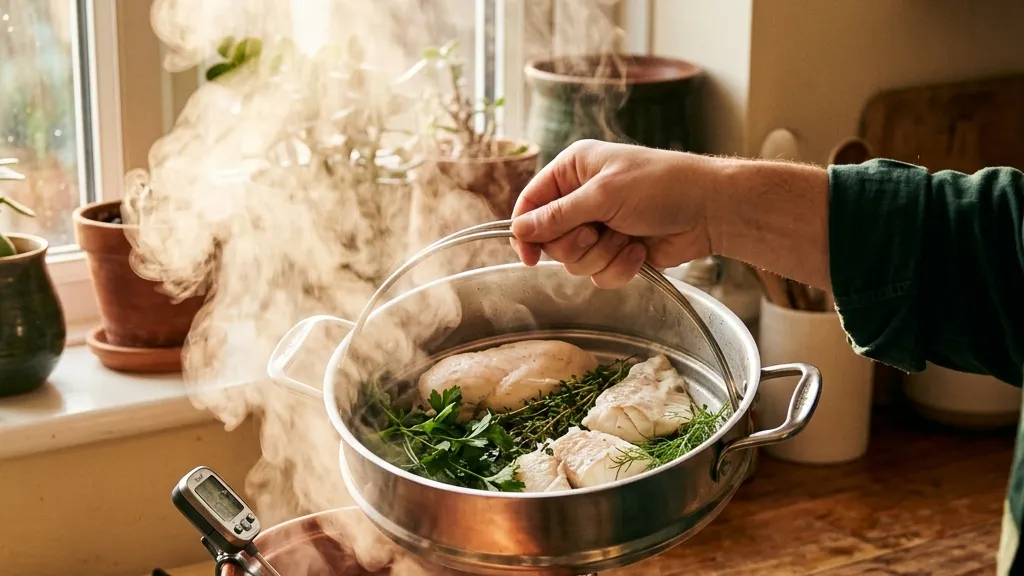
Short answer: BARF India sells a cooked, fresh-food range that is a real step up from biscuit, and their ingredient lists are published, which many Indian brands still do not do. What we could not find is the thing that decides whether any bowl is complete: a per-nutrient statement against a published standard. Below we read their own labels, word for word.
Search “BARF India review” and you mostly get opinions. We would rather do what we did for kibble in our Pedigree label-reading post: quote the label verbatim, apply a couple of simple rules, and let you conclude for yourself.
First, the name: BARF means raw
The acronym BARF was coined by the Australian veterinarian Dr. Ian Billinghurst, the founder of the modern raw-feeding movement, and stands for “Biologically Appropriate Raw Food” (in its earlier form, “Bones And Raw Food”). It names a feeding philosophy whose defining feature is that the food is not cooked. The brand’s own logo expands the abbreviation as “B.A.R.F. Basic Ancestral Raw Food” — raw is in the name either way.
BARF India does sell frozen raw ranges, true to the name. But the products this post is about sit in their “Fresh, Cooked Dog Food” collection: gently cooked meal packets sold under a raw-feeding acronym. That is not an accusation — there is nothing wrong with selling cooked food, and we think cooked fresh food is a fine way to feed a dog. It is simply a definition the buyer deserves to have in hand, because cooking is precisely the step the BARF philosophy defines itself against — and cooking has one specific nutritional consequence we will come back to below.
The label, verbatim: Chicken, Vegetables & White Rice
Wondering how this applies to your own pet? Build their bowl — two minutes, and it gives the exact grams for their weight.
Here is the ingredient declaration from the product page of their “Gently Cooked Dog Food - Chicken, Vegetables & White Rice”, quoted word for word:
“60% Chicken Meat, 20% White Rice, 10% Organ Meats (Liver & Gizzards), 9% Vegetables (Carrots, Green Peas, French Beans), 1% Mineral Mixture and Vitamin Pre-Mix”
Source: https://barfindia.com/products/cooked-dog-food-chicken-white-rice (accessed 28 August 2026).
Credit first: this is a meat-led list with declared percentages — 60% chicken at the top — which is a genuinely different structure from the cereal-first kibble labels we read in the Pedigree post (remember the rule: ingredients are listed in descending order by weight, and here the brand goes further and prints the percentages). The page also carries these claims, again verbatim: “Rich in calcium and phosphorus”, “complete nutrition for both puppies and adult dogs”, “human-grade ingredients”, and a “highly digestible and nutritionally balanced meal”. The published guaranteed analysis reads: “Crude Protein (min) 8.0%, Crude Fat (min) 3.0%, Crude Fiber (max) 1.0%, Moisture (max) 72%” — four values, stated as-fed (the low protein number is not alarming in itself; fresh food is ~72% water, so as-fed percentages always look small next to kibble).
A second label: the grain-free chicken recipe
Their “Gently Cooked Dog Food - GRAIN FREE, Boneless Chicken, & Vegetables” page lists, verbatim:
“Boneless Chicken Meat, Chicken Liver, Chicken Gizzards, Chicken Hearts, Carrots, Green Peas, French Beans, Omega-3 Sprinkles” … “Dicalcium Phosphate, Calcium Carbonate, Potassium Chloride, Fish Oil, Magnesium Amino Acid Chelate, Taurine, Zinc Amino Acid Chelate, Selenium Yeast”
Source: https://barfindia.com/products/cooked-dog-food-grain-free-chicken-vegetables (accessed 28 August 2026).
Notice something a nutritionist would immediately respect: this recipe names its supplements — dicalcium phosphate and calcium carbonate (the standard tools for fixing a meat bowl’s calcium), taurine, chelated zinc and magnesium, selenium yeast. That is more ingredient transparency than most Indian fresh-food sellers offer. The chicken-and-rice recipe, by contrast, wraps all of that into an unitemised “1% Mineral Mixture and Vitamin Pre-Mix”.
What we could not find
Here is the observed fact, stated exactly: on both product pages, on 28 August 2026, we could find no reference to any named nutrient standard — no AAFCO, no FEDIAF, no NRC — and the published guaranteed analysis stops at four values: protein, fat, fibre, moisture. The words “complete nutrition” and “nutritionally balanced” appear as claims, but on the pages we read, no standard is named against which they are measured, and no full nutrient analysis (thiamine, vitamin E, iodine, zinc, calcium:phosphorus ratio…) is published. Pages and formulations change — the brand may well hold this data internally — but a buyer reading the page today cannot see it.
So the three questions a nutritionist would ask — of this brand or any fresh-food brand, including us:
- Validated to which named standard? NRC 2006, FEDIAF or AAFCO — and for which life stage? “Complete for both puppies and adult dogs” is a strong claim; puppies have higher floors.
- Is the full nutrient analysis published? Not just protein/fat/fibre/moisture — the micronutrients where home-style bowls actually fail.
- By how much does each nutrient clear its floor? A pass at 101% and a pass at 150% are different promises on a variable fresh-food supply chain.
“Rich in calcium and phosphorus” — the ratio is what matters
One claim deserves its own section. “Rich in calcium and phosphorus” is a statement about presence. But dogs do not need calcium and phosphorus to be abundant — they need them in a ratio of roughly 1–2 parts calcium to 1 part phosphorus. Meat and rice are naturally phosphorus-heavy and calcium-poor, so a meat-led bowl is “rich in phosphorus” by default; the whole game is whether enough calcium is added to invert that. “Rich in both” tells you neither the ratio nor whether either floor is met. To be fair, the grain-free recipe’s dicalcium phosphate and calcium carbonate are exactly how you move that ratio — the open question is simply that the resulting ratio is not published on the page.
What our study found for bowls of this shape
Cooked chicken + white rice + carrots, peas and beans is almost exactly the shape we ran through the checker in our five-bowl study of Indian home-cooked bowls. Without a validated micronutrient correction, every bowl of this composition came in 9–21 nutrients below the NRC 2006 floors, and four shortfalls appeared in every single bowl regardless of recipe: thiamine (vitamin B1) at 0% — destroyed by cooking itself, independent of ingredients — vitamin E at 0–16%, iodine at 25–36%, and a calcium:phosphorus ratio of 0.18–0.69 against the 1–2 range.
To be completely clear: we have not laboratory-tested BARF India’s food, and none of these numbers are measurements of their product. They are what our study found for home-style bowls of this shape without correction. Whether their 1% pre-mix closes those gaps — and by how much — is precisely what a published full analysis against a named standard would show, and that is why the thiamine point matters double for a cooked product sold under a raw name: cooking destroys B1, so the pre-mix has to carry it entirely. The label cannot tell you; only the analysis can.
Credit where it is due
Read fairly, there is real merit on these pages. Gentle cooking is a lower-heat process than the extrusion that makes kibble. Fresh, small-batch, meat-first food with declared percentages is a genuine step up from cereal-first dry food. The grain-free recipe’s named supplement list — chelated minerals, taurine, selenium yeast — shows someone thought about micronutrients. And it is made in India for Indian dogs. If the choice is between a low-tier kibble and a gently cooked meat-led bowl, the label structure alone favours the latter.
One definition worth keeping: ancestral is not the same as appropriate
Dr. Billinghurst’s original acronym claimed “Biologically Appropriate Raw Food” — a claim about the animal in front of you. “Ancestral” is different: it describes what the lineage ate, at the lineage’s energy burn. A free-ranging carnivore eats far more food, from a far wider menu, than a neutered apartment pet — and the micronutrients ride along on that volume and variety. Shrink the calories and the menu, and the same “ancestral” recipe under-delivers the nutrients that used to arrive with the throughput. That is why we say: BARF is a good start. BARC is the right finish — the biology kept, the missing arithmetic corrected for the animal that actually lives in your home. We explain the full argument in our plain-language guide to the BARF diet in India.
The Growlrr contrast: measured, not asserted
Our answer to the same problem is structural. Instead of shipping you cooked meals and asking you to trust an unpublished balance, the BARC Protocol has you cook fresh food yourself — from meat you chose, at a price you control — and complete it with one weight-dosed Growlrr BowlBalancer™ sachet. The completeness claim is not an adjective on a product page: the formulation is validated against the NRC 2006 floors across 1 Million+ Monte-Carlo simulated feeding days (Wilson C/R 95/99), and the methodology is published for anyone to read. Same lens, applied to ourselves.
References
- Gently Cooked Dog Food - Chicken, Vegetables & White Rice, ingredient declaration, claims and guaranteed analysis as published by BARF India. https://barfindia.com/products/cooked-dog-food-chicken-white-rice (accessed 28 August 2026).
- Gently Cooked Dog Food - GRAIN FREE, Boneless Chicken, & Vegetables, ingredient declaration, claims and guaranteed analysis as published by BARF India. https://barfindia.com/products/cooked-dog-food-grain-free-chicken-vegetables (accessed 28 August 2026).
- Fresh, Gently Cooked Dog Food collection, BARF India. https://barfindia.com/collections/fresh-gently-cooked-dog-food (accessed 28 August 2026).
- Billinghurst I. Give Your Dog a Bone: The Practical Commonsense Way to Feed Dogs for a Long Healthy Life. 1993. (Origin of the BARF raw-feeding philosophy.)
- National Research Council (NRC). Nutrient Requirements of Dogs and Cats. Washington, DC: National Academies Press; 2006.
Check your dog’s bowl against NRC 2006 (free) →
Related reading
- What’s missing from a home-cooked bowl? The five-bowl study
- Is Pedigree good for dogs? What the label actually says
- Ready-to-eat fresh dog food: what to check before you subscribe
- Are “fresh” dog foods really fresh? The AI got fooled twice
- Herbs are not nutrients: reading an Ayurvedic pet food label