
BARF and raw dog food in India: what it is, the risks, and the cooked alternative
Published
What is the BARF diet?
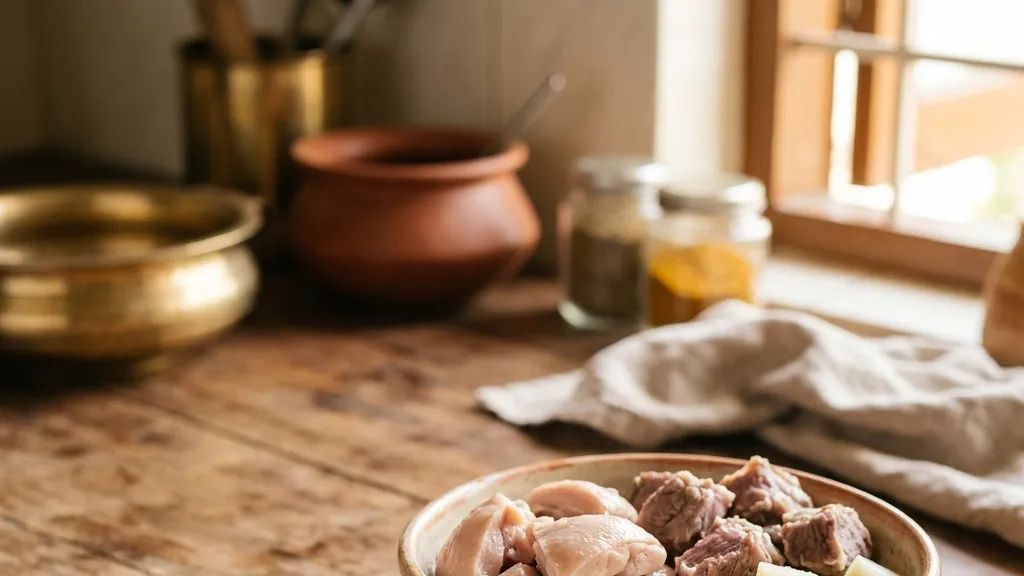
BARF stands for “Biologically Appropriate Raw Food” (originally “Bones And Raw Food”) — a feeding philosophy built on uncooked meat, ground bone, organ meats and small amounts of vegetable matter, in ratios meant to echo whole prey. Typical formulations run around 70–80% muscle meat, 10% organs and 10% edible bone.
Who invented the BARF diet? Credit where it is due
Wondering how this applies to your own pet? Build their bowl — two minutes, and it gives the exact grams for their weight.
The acronym and the movement were created by the Australian veterinarian Dr. Ian Billinghurst, whose 1993 book Give Your Dog a Bone launched modern raw feeding. Any brand selling “BARF” today — anywhere in the world — is selling his idea, whether or not the label says so. The idea deserves its author’s name on it.
Does the BARF diet work? What it gets right
Credit first, because it is real: fresh animal-source food is more digestible than extruded kibble — peer-reviewed digestibility work shows fresh and raw diets deliver more usable amino acids per gram than the equivalent dry food. Meat-first ratios, organ inclusion and bone-derived calcium are genuine answers to genuine kibble problems. The instinct that brought you here is not wrong.
The one thing ancestral ratios miss: your dog’s energy budget
Here is the piece almost no raw guide mentions. Nutrient needs track the body — the skeleton, the blood, the thyroid. Food, though, arrives in proportion to calories eaten. A free-ranging carnivore burns and eats a multiple of what a neutered, indoor, lightly-walked pet eats — and every extra kilogram of varied prey carries minerals and vitamins along with it. Nature never balanced a recipe; it oversampled — many meals, many species, many tissues, at high volume.
Your apartment dog gets neither multiplier. A third of the calories, from one recipe, every day. Whatever that single recipe under-delivers, it under-delivers every single day — and for a bowl of muscle, organ and bone the arithmetic consistently lands short on the same few nutrients: manganese, vitamin E, vitamin D, iodine. These are not exotic concerns; they are the nutrients that ride on volume and variety, and the modern lifestyle removed both.
Nor can “just add more organs” fix it: liver is so dense in vitamin A that scaling it up crosses the safe upper limit for vitamin A long before it closes the manganese gap. The organ lever runs out first — which is why, if you read raw labels closely, nearly every commercial raw food quietly includes a “nutrient blend” or premix. The arithmetic leaves no other exit.
Is raw feeding safe in India?
Separately from nutrition, both the AVMA and the FDA advise against raw animal-source protein for pets because of pathogen and antimicrobial-resistance risk — a risk that Indian summers and open-market meat chains do not make smaller. Gentle cooking removes it while keeping the digestibility advantage over kibble.
BARF is a good start. BARC is the right finish.
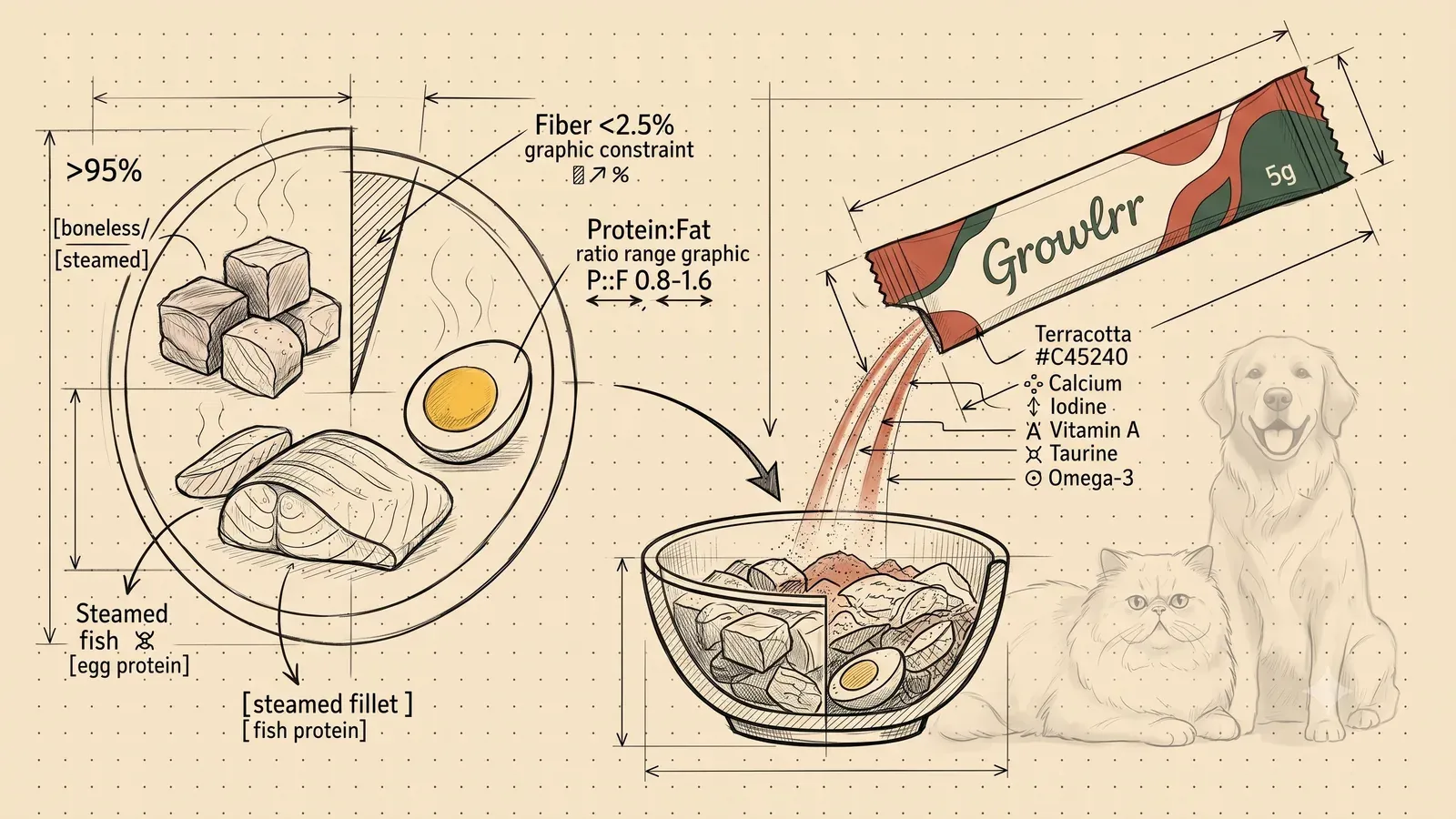
Ancestral describes the past; appropriate is a claim about the animal in front of you. For a low-energy pet, appropriate means the ancestral logic plus residual correction — which is exactly what BARC stands for: Biologically Appropriate, Residually Corrected. You cook a fresh, meat-first bowl from your own market, and one weight-dosed Growlrr BowlBalancer™ sachet carries the floors the bowl cannot — calcium balance, iodine, manganese, vitamins D and E, thiamine — validated against the NRC 2006 standard across 1 Million+ simulated feeding days (Wilson C/R 95/99), with the method published. Same biology, minus the pathogens, plus the finish.
Three questions to ask any raw (or fresh) brand
- Complete to which named standard — NRC 2006, AAFCO or FEDIAF — and for which life stage?
- Where is the full nutrient analysis — not just protein and fat, but manganese, vitamin E, iodine, thiamine, and the calcium-to-phosphorus ratio?
- What exactly is in the “nutrient blend”? If a recipe is complete, its completeness has ingredients — they can be named.
The brands that can answer will be glad you asked.
Is raw feeding good for dogs in India? The honest answer
Folded in (2026-09-17): the safety and nutrition questions on raw, in Indian conditions, and the cooked alternative.
Why raw feeding feels right — and what it gets right
Dogs are carnivore-built. Meat-first feeding, organ meats and bone-derived calcium answer real problems with cereal-first kibble — and peer-reviewed digestibility studies back the felt difference: fresh and raw diets deliver more usable protein per gram than equivalent extruded dry food. If you are researching raw, your instinct is sound. Keep it.
The safety question, in Indian conditions
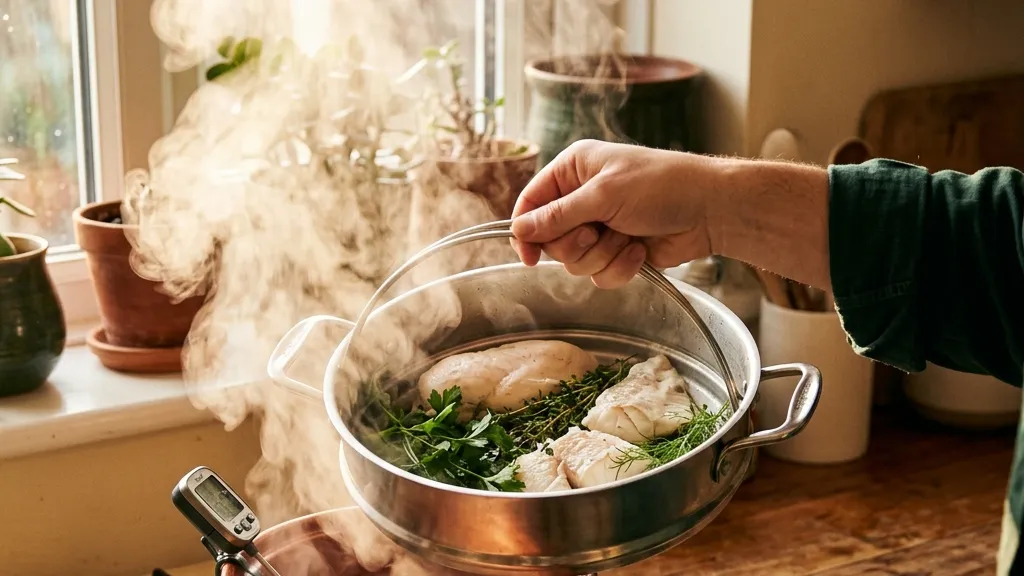
Raw meat carries Salmonella, E. coli and antimicrobial-resistant bacteria often enough that the AVMA and the FDA both advise against feeding it — for the pet’s sake and for the humans in the kitchen. A frozen chain that survives a Norwegian winter meets a different reality in an Indian May, in transit, and in a domestic freezer through power cuts. Gentle cooking removes the pathogen problem entirely while keeping fresh food’s digestibility advantage over kibble. You lose almost nothing that matters — and the one real cooking loss (thiamine) is precisely the kind of gap a measured correction restores.
The nutrition maths nobody prints
A wild carnivore eats a multiple of an apartment dog’s calories, from a menu of many species and tissues — and its minerals and vitamins arrive with that volume and variety. Your neutered, indoor dog eats a fraction of that, from one recipe, daily. Nutrient needs track the body; food arrives with the calories — shrink the calories and the same “natural” ratios come up short, reliably on the same few nutrients: manganese, vitamin E, vitamin D, iodine, and calcium balance if the bowl is boneless. This is why, read closely, almost every commercial raw or fresh food carries a nutrient premix — disclosed or otherwise. The ratios alone never finish the job at pet-sized calories.
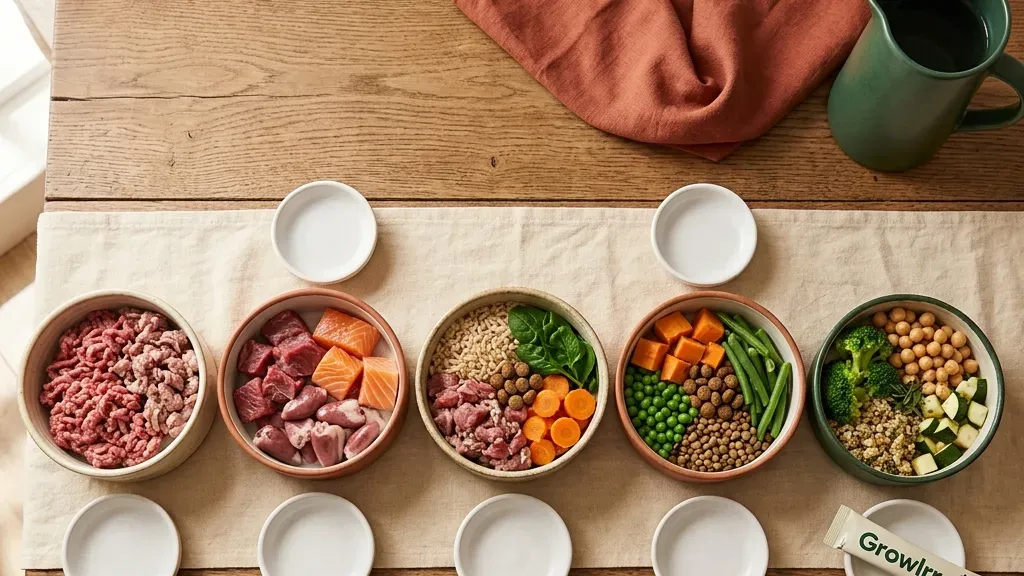
Cooked + corrected: raw’s logic, without raw’s risks
The BARC approach keeps everything raw feeders are right about — fresh, meat-first, biologically appropriate food — and changes the two failure points: the meat is gently cooked (pathogens gone), and one weight-dosed Growlrr BowlBalancer™ sachet residually corrects the bowl to every NRC 2006 floor — validated across 1 Million+ simulated feeding days (Wilson C/R 95/99), method published. You buy the meat from the shop you already trust; the sachet holds the maths. BARF is a good start. BARC is the right finish.
If you still choose raw: questions that protect your dog
- Complete to which named standard (NRC 2006 / AAFCO / FEDIAF), for which life stage?
- Where is the full analysis — manganese, vitamin E, iodine, thiamine, Ca:P — not just protein and fat?
- What is in the “nutrient blend”, exactly?
- What does the cold chain look like between their freezer and yours — and what happens in transit in May?
References
- American Veterinary Medical Association & U.S. FDA. Positions on raw or undercooked animal-source protein in cat and dog diets.
- Freeman LM, et al. Current knowledge about the risks and benefits of raw meat-based diets for dogs and cats. JAVMA. 2013;243(11):1549–1558.
- Geary EL, et al. J Anim Sci. 2023;101:skad377. (Digestibility of raw, fresh and extruded diets.)
- National Research Council (NRC). Nutrient Requirements of Dogs and Cats. 2006.
- Nowak L, et al. Nutritional secondary hyperparathyroidism after exclusive boneless raw-meat feeding: a case series. Animals. 2024;14(12):1783.
Build a fresh, complete bowl for your own dog →
References
- Billinghurst I. Give Your Dog a Bone. 1993. (Origin of the BARF philosophy.)
- National Research Council (NRC). Nutrient Requirements of Dogs and Cats. Washington, DC: National Academies Press; 2006.
- FEDIAF. Nutritional Guidelines for Complete and Complementary Pet Food for Cats and Dogs — note its adult-dog values are NRC levels raised to compensate for the lower energy intake of household dogs.
- Geary EL, et al. Standardized amino acid digestibility… of frozen raw, freeze-dried raw, fresh, and extruded dog foods. J Anim Sci. 2023;101:skad377.
- American Veterinary Medical Association & U.S. FDA. Positions on raw animal-source protein in pet diets.
- Seawright AA, et al. Hypervitaminosis A and deforming cervical spondylosis of the cat. J Comp Pathol. 1967;77(1):29–39.
Grade your own bowl against NRC 2006 (free) →
Related reading
- Is raw dog food good for dogs in India? An honest answer
- Is BARF India’s cooked dog food good? Reading the recipe like a nutritionist
- The BARC Protocol: complete, balanced, safe — and proven
- What’s missing from a home-cooked bowl? The five-bowl study
- Why a stent engineer rebuilt his cat's dinner
- Is Licious raw chicken safe for cats?