
Can dogs eat rice, roti and chicken? (the Indian kitchen list)
Published
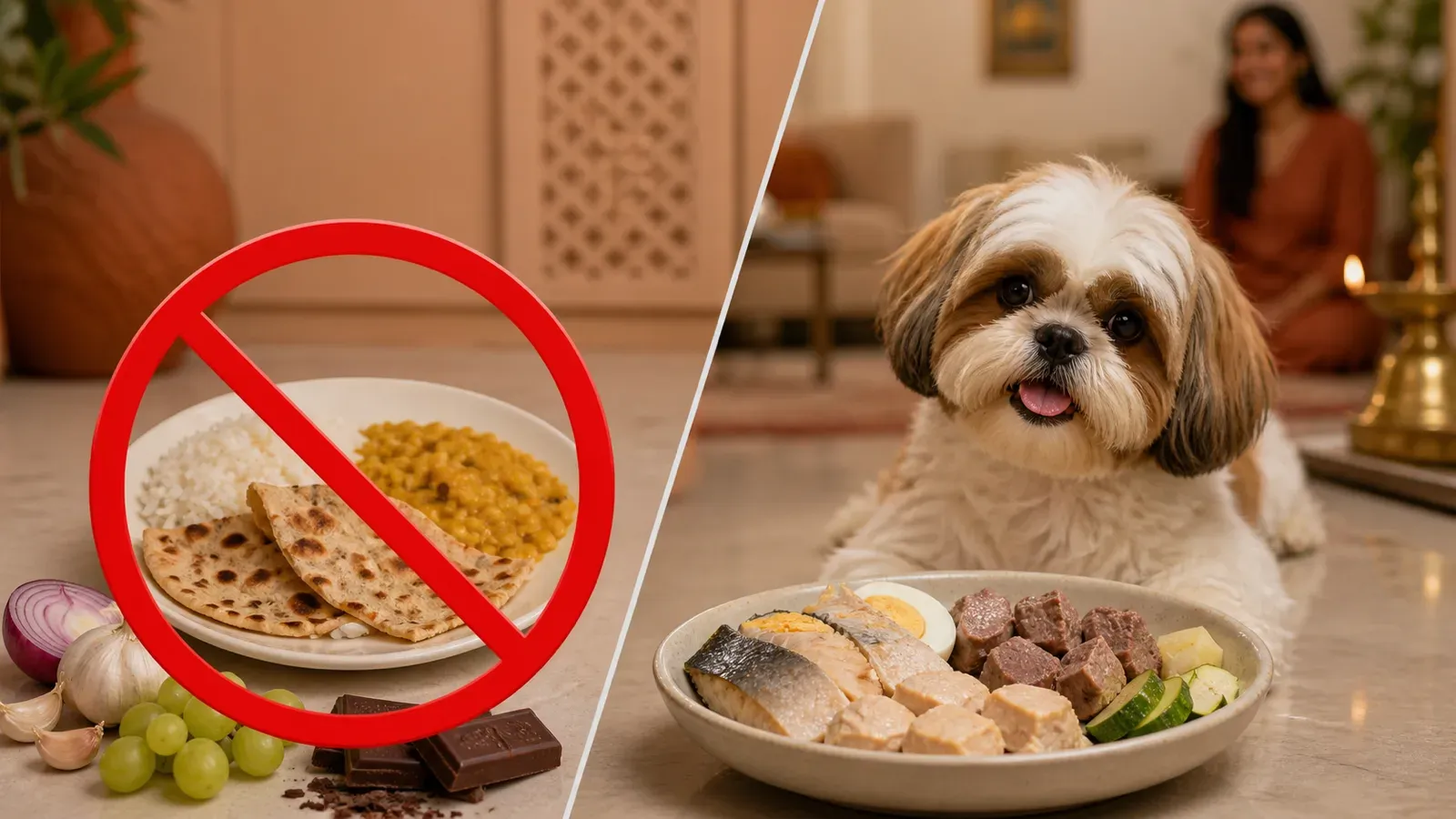
Most Indian kitchens already hold everything a dog needs and a few things that can genuinely harm it. Here is a simple list you can keep in your head.
Fine in moderation
The whole kitchen at a glance — details for each item below:
| Food | Safe for dogs? | Notes |
|---|---|---|
| Rice | ✓ Yes | Plain and cooked, in measured portions |
| Roti | ✓ Yes | Plain, small pieces; skip excess ghee |
| Boiled chicken | ✓ Yes | Boneless only; no masala |
| Curd (plain) | ✓ Yes | Small amounts; some dogs are lactose-intolerant |
| Dal (plain) | ✓ Yes | Plain and unseasoned, in small amounts |
| Paneer | ⚠ Caution | Fatty; an occasional treat only |
| Onion | ✗ No | Toxic in all forms — raw, cooked or powdered |
| Garlic | ✗ No | Toxic, like onion; rules out most tadka |
| Grapes / raisins | ✗ No | Can cause kidney failure even in small amounts |
| Chocolate | ✗ No | Toxic to dogs; never feed |
| Chai / coffee | ✗ No | Caffeine is toxic to dogs |
| Fried / masala food | ✗ No | Spices, salt and oil do not belong in the bowl |
- Plain cooked rice — gentle, easy to digest, a useful base.
- Plain roti, in moderation — a small piece of plain chapati is fine occasionally; it is a filler, not a meal, so keep it modest.
- Cooked boneless chicken — a staple protein; plain, no masala, and always boneless (see below).
- Egg — cooked egg is an excellent, complete protein for dogs.
- Curd (plain), occasionally — fine for many dogs in small amounts, though some are lactose-intolerant, so start small.
- Certain vegetables — plain cooked carrot, pumpkin, French beans and the like, in modest amounts for fibre.
Avoid or never feed (toxic)
Wondering how this applies to your own pet? Build their bowl — two minutes, and it gives the exact grams for their weight.
- Onion and garlic — toxic to dogs and cats in all forms (raw, cooked, powdered); they damage red blood cells. This rules out most gravies and tadka.
- Chocolate — toxic; never feed.
- Grapes and raisins — can cause kidney failure even in small amounts; never feed (watch out for kishmish in sweets).
- Excess salt, sugar and masala — not treats; keep the bowl plain.
- Cooked bones — cooked bones splinter and can cause choking or internal injury; never give cooked bones from chicken or mutton.
Safe-as-a-treat is not a complete diet
Here is the part that matters most. The fact that chicken, rice and roti are safe does not make a plate of them a complete diet. A dog fed only chicken and rice slowly runs short on calcium balance, iodine, zinc, copper and several vitamins — safe ingredients, incomplete nutrition. A complete daily bowl needs the meat base and the missing micronutrients.
That is what Growlrr is for: cook a plain, dog-safe meat bowl from your own kitchen, then add one 5 g Growlrr BowlBalancer™ sachet dosed to your dog’s weight, which completes it to the NRC 2006 floors. Safe kitchen food becomes a genuinely complete meal.
References
- ASPCA Animal Poison Control Center. People Foods to Avoid Feeding Your Pets (toxic-food guidance).
- National Research Council (NRC). Nutrient Requirements of Dogs and Cats. Washington, DC: National Academies Press; 2006.
- Association of American Feed Control Officials (AAFCO). Dog and Cat Food Nutrient Profiles (current edition).
Turn your kitchen’s safe foods into a complete bowl →