
Indian kitchen foods dogs and cats can (and can't) eat: the master list
Published
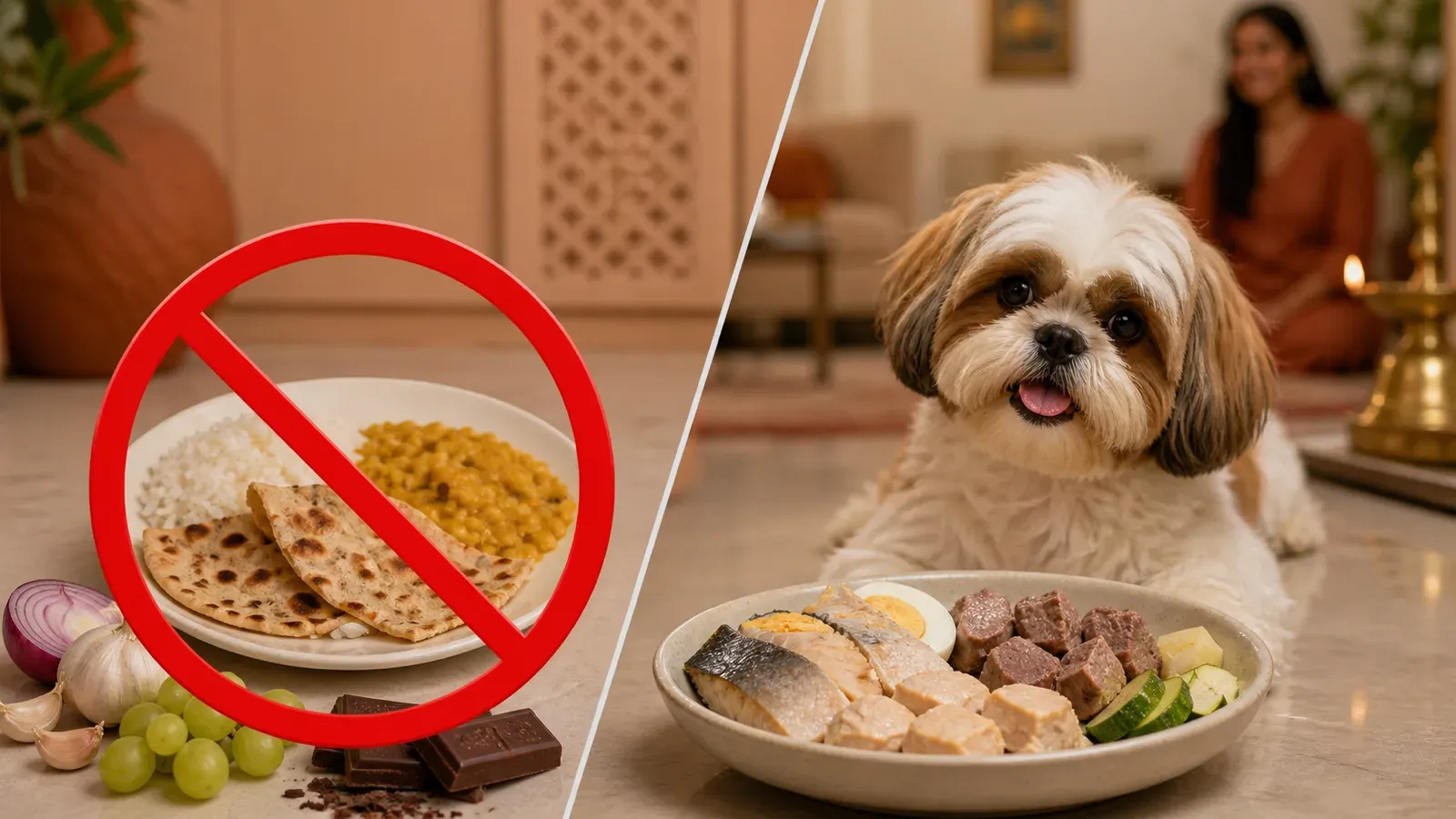
Short answer: most of what an Indian kitchen cooks is fine for a dog or cat in the right portion — plain, boneless, and not the whole bowl. A handful of foods are never safe. The rest is arithmetic, and the arithmetic is below.
Never
Onion and garlic in any form, grapes and raisins, chocolate, xylitol-sweetened anything, cooked bones, and alcohol. These are not “in moderation” foods.
Proteins — the centre of the bowl
Wondering how this applies to your own pet? Build their bowl — two minutes, and it gives the exact grams for their weight.
- Goat / mutton — Mutton is one of the best fresh proteins available in India — lean, widely sold, rarely fed before.
- Eggs — Yes — eggs are one of the best foods a dog can eat daily, portioned by size.
- Fish (which ones) — Tilapia, catla, rohu, basa, tuna, sardines — which fish belong in an Indian pet's bowl, which are occasional, and which to leave on the shelf.
- Crab and shrimp — Cooked, shelled and occasional: fine.
- Raw chicken (for cats) — A good supplier solves sourcing and cold chain.
Carbs and dairy — the fillers
- Rice, roti and chicken — Can dogs eat rice, roti and chicken? Yes — plain and portioned.
- Roti — Roti is not poison and your dog is not damaged.
- Curd rice — Curd rice is fine as an occasional bland topper for dogs, but as a daily diet it misses protein, fat and most vitamins.
- Paneer — Paneer is not toxic to dogs — it is just far richer than most owners realise.
- Milk (cats) — Most adult cats are lactose intolerant, and the saucer of milk is a picture from storybooks, not nutrition.
- Soya chunks — Soya chunks are safe for most dogs in small amounts — but as a protein replacement they fail the carnivore math.
Vegetables
- Which vegetables a carnivore can use — Pumpkin, zucchini, bell peppers and mushrooms in; spinach, sweet potato, broccoli and cabbage out.
The rule under every line
A food being safe is not the same as a bowl being complete. Chicken and rice is safe and is short of calcium, iodine, zinc and vitamin E on the day it is cooked. That is the whole reason a homemade bowl needs balancing, and why the bowl builder sizes the correction to your animal rather than to a recipe.