
Which fish is safe for dogs and cats in India?
Published
Why fish at all
Fish earns its place in a bowl for two reasons: it is a lean, highly digestible animal protein, and the oily species carry the long-chain omega-3 fatty acids EPA and DHA that land animals barely provide. Those two jobs are different, and no single fish does both well — which is the whole reason this post is not just a list.
The everyday fish: tilapia
Wondering how this applies to your own pet? Build their bowl — two minutes, and it gives the exact grams for their weight.
Farmed tilapia is our default, and the reasons are unglamorous. It is available across India rather than only near a coast. It is sold as a clean boneless fillet. It is short-lived and low on the food chain, so it does not accumulate mercury the way large predatory fish do. And it is priced for daily use.
What it is not is an omega-3 source. Tilapia is lean, and lean is the point — it is a protein, not an oil. The EPA and DHA in a Growlrr bowl come from the sachet, which is exactly why the base fish does not need to carry them.
The Indian carps: catla and rohu
Both are fine. Catla feeds at the surface, rohu through the column — neither is a bottom-feeder, and both are widely farmed and sold fresh across the country. Buy them filleted and check for pin bones, which is the same rule as every other fish here.
What to be careful with
- Basa. Not our first choice. Basa is a farmed catfish, so it falls under the bottom-feeder rule below, and it is low in omega-3 compared with genuinely oily fish. That is enough reason to prefer tilapia; we are not claiming basa is unsafe.
- Catfish and other bottom-feeders. Skip them. Feeding habit and habitat both argue against making them a staple.
- Large tuna — bluefin, bigeye, big yellowfin. Mercury accumulates with size and lifespan, and these are the fish at the top of that curve.
- Small, short-lived tuna, fresh from Kerala, Tamil Nadu or Gujarat: fine, but three or four times a year. Canned tuna is genuinely useful for travel or an emergency, and it sits under the same cap — mercury does not care that it came from a tin. Choose water-packed with no added salt: brine reintroduces the sodium problem, and oil adds fat nobody asked for.
The one to actually avoid: dried and salted fish
This matters in India more than anywhere, because it is the fish that travels. Fresh sardine and anchovy are a coastal privilege. What reaches an inland kitchen is the dried, salted version — nethili karuvadu, dried sardine, the whole sukka family — and that salt load is not something to build a daily bowl on. It is the substitute that exists, and it is the wrong one. Tilapia is farmed nationwide, sold as a clean boneless fillet, and priced for every day. That is why it is our base.
Oily fish, once a month
Fresh sardine, anchovy and mackerel are genuinely good food — real omega-3, and, eaten whole, real calcium. Our guidance is once a month or less, and the reason is not fear. It is that an adult dog or cat down-regulates calcium absorption and integrates nutrients over weeks rather than days, so an occasional whole fish sits comfortably inside a well-built diet.
Cook it, and here is the specific reason
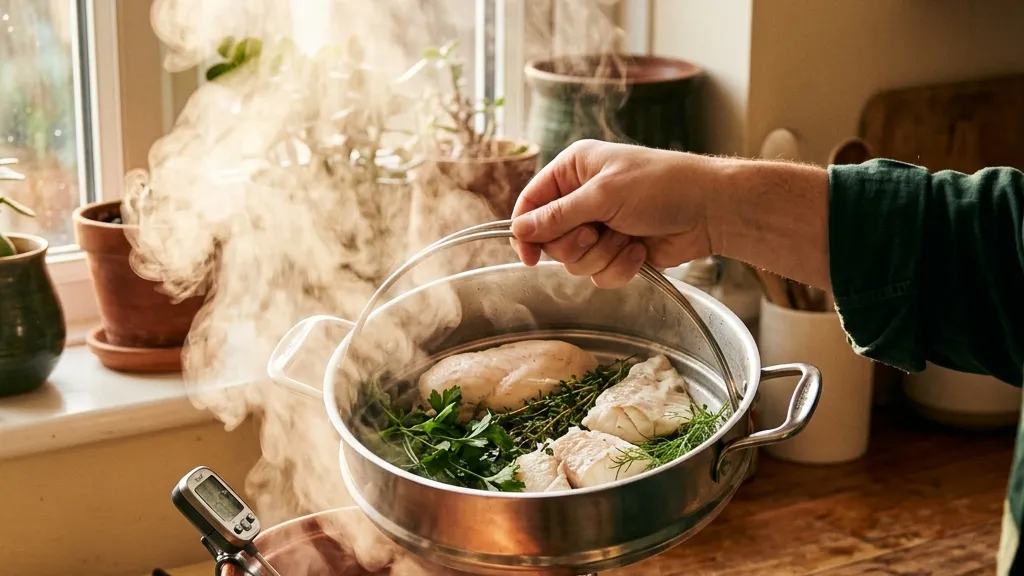
Many raw fish carry thiaminase, an enzyme that destroys thiamine (vitamin B1). Thiamine is already the most fragile thing in a home-cooked bowl — heat destroys it, which is why a corrected bowl supplies it deliberately. Feeding raw fish on top of that is subtracting from an account already at zero. Cooking denatures thiaminase. Gently cooked fish is the safe form, and it removes the parasite and pathogen questions at the same time.
The rules, short
- Boneless fillets. No pin bones.
- Tilapia daily; catla and rohu freely.
- Fresh oily fish once a month or less.
- Small tuna, fresh or canned, three or four times a year.
- No dried or salted fish. No bottom-feeders. No large tuna.
- Always cooked.
A fresh fish bowl still needs completing — muscle meat of any species is short on calcium, iodine, and the rest of the micronutrient set measured against NRC 2006. That is the job weight-dosed sachets do. Build your pet's bowl →