
Wet vs dry dog food: which is better (and where does fresh fit)?
Published
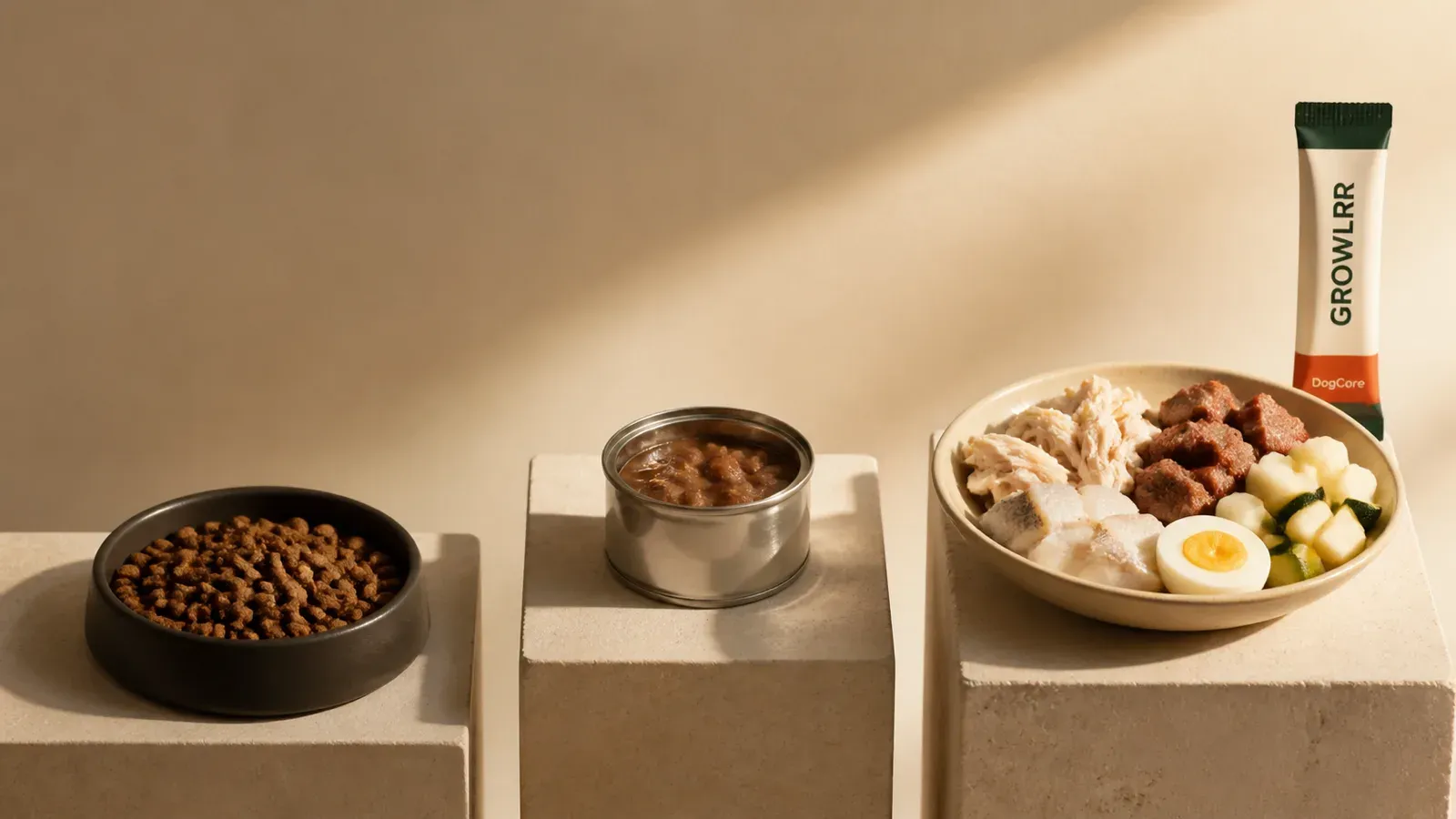
“Wet or dry?” is one of the first questions every new pet parent in India asks, and the answer is that each format is a set of trade-offs rather than a clear winner. It helps to look at what each one is really doing before you decide.
Dry food (kibble): convenient and cheap, but dry and heavily processed
Kibble is the dry, shelf-stable pellet most people picture as “dog food”. It is made by extrusion — a dough of ground meat, cereal and water is forced through a die at high heat and puffed dry. Its strengths are genuine: it is the cheapest option per calorie, it keeps for months without a fridge, and you simply scoop and serve. The trade-offs are just as real. Kibble carries very little moisture (typically under 10% water), so a dog on dry-only food depends heavily on drinking enough from the bowl. The high-heat processing also means sensitive vitamins are added back as a sprayed-on premix after cooking, and the pellet needs a starch base to hold its shape — which is why many bags carry a large share of cereal.
Wet food: palatable and hydrating, but you pay to ship water
Wondering how this applies to your own pet? Build their bowl — two minutes, and it gives the exact grams for their weight.
Wet food comes in tins and pouches and is cooked in its sealed pack (a process called retort). Its strengths are palatability and moisture: it is usually around three-quarters water by weight, which many dogs find tastier and which genuinely helps hydration. The trade-off is cost. Because so much of the pack is water, you are paying to freight and store water across the country, and the price per calorie lands several times higher than kibble. Processed packaged food also sits in a higher GST slab in India than the fresh meat you would buy at the market.
Where fresh fits: the third option
There is a third path that most “wet vs dry” articles skip: a fresh, home-cooked bowl built on animal protein. Fresh meat like chicken, mutton or goat, lean fish like tilapia, and egg is naturally high in moisture and high in animal protein — the two things dogs are built to thrive on. The one catch is that a plain meat bowl is not, by itself, a complete diet: it is short on calcium balance, iodine, zinc, copper, vitamin D and E, and the omega-3 fatty acids EPA and DHA. That gap is exactly what a balancer is for.
Growlrr’s approach keeps the best of fresh and removes the guesswork: you cook a simple meat bowl, then add one 5 g Growlrr BowlBalancer™ sachet dosed to your dog’s weight, which completes the micronutrients to the NRC 2006 floors. You get the moisture and animal protein of fresh food, without needing a chemistry degree to make it complete. Sachet prices are on the pricing page.
The three options side by side:
| Wet | Dry (kibble) | Fresh-balanced | |
|---|---|---|---|
| Moisture | High — about three-quarters water | Low — typically under 10% water | Naturally high — fresh meat |
| Processing | Retort-cooked in the sealed pack | High-heat extrusion; vitamins sprayed back on | Gently cooked at home |
| Cost driver | You pay to freight and store water | Cheapest per calorie | Local market meat plus the daily sachets |
| Convenience | Open and serve | Scoop and serve; no fridge needed | You cook, then add the sachet |
| Completeness | Complete as formulated in the pack | Complete as formulated in the pack | Complete once the balancer closes the gaps (NRC 2006) |
References
- National Research Council (NRC). Nutrient Requirements of Dogs and Cats. Washington, DC: National Academies Press; 2006.
- Association of American Feed Control Officials (AAFCO). Dog and Cat Food Nutrient Profiles (current edition).
- FEDIAF. Nutritional Guidelines for Complete and Complementary Pet Food for Cats and Dogs (current edition).
Build a complete fresh bowl for your dog →
Related reading
- Is ready-to-eat fresh dog food actually better?
- Which fish is safe for dogs and cats in India?
- The vegetables a carnivore can actually use
- Do carbohydrates make cats fat and diabetic?
- Why the pet food rules have not changed — and what PFLM actually fixes
- The couch-potato problem: “complete and balanced” depends on how much your pet eats