
Curd rice for dogs: good or not?
Published
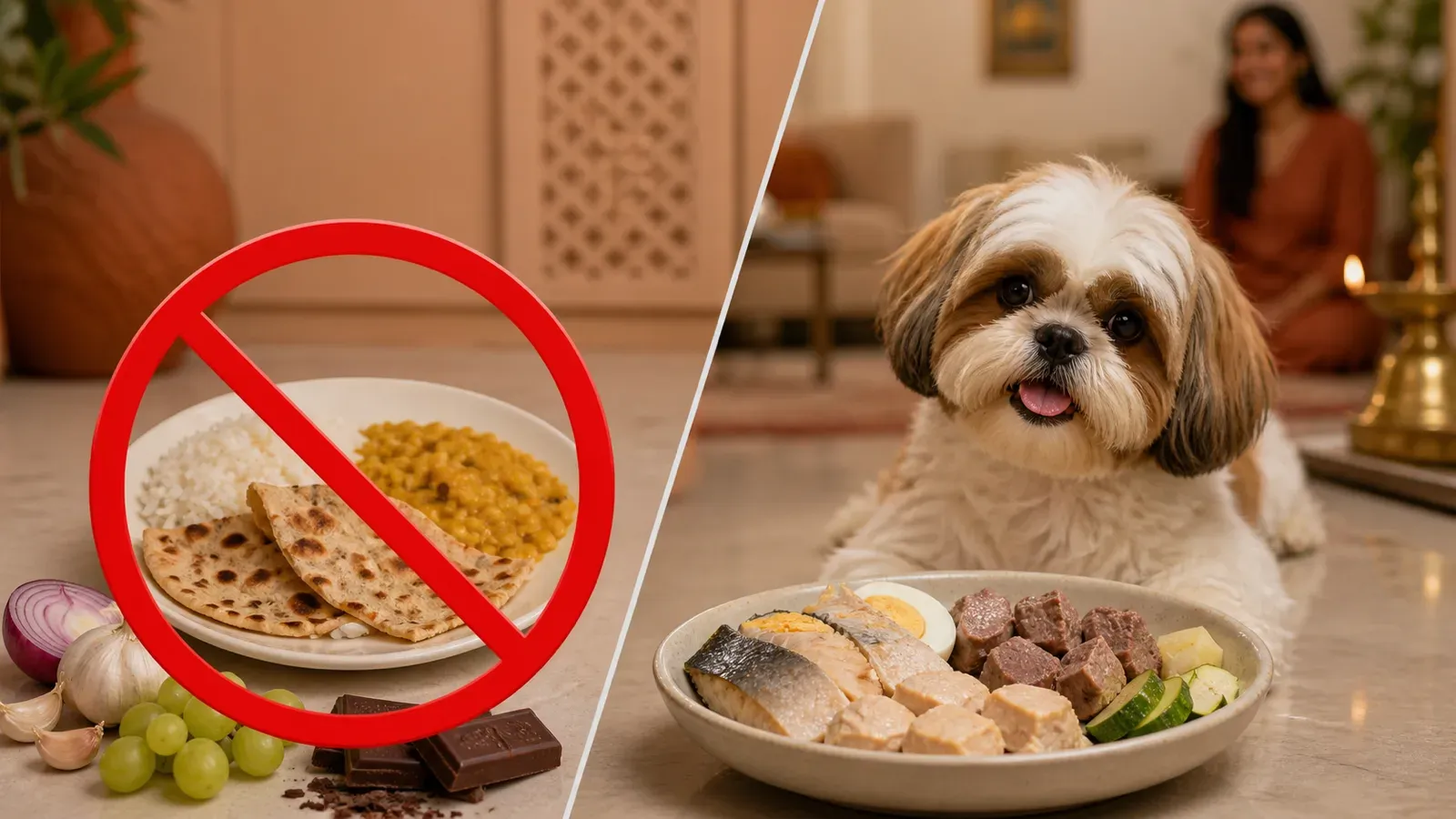
When curd rice is genuinely fine
As an occasional, plain, short-term food, curd rice is a perfectly reasonable thing to give a dog. It is the classic gentle bland-diet topper — useful for an upset stomach, in the summer heat, or during a bout of loose motions (diarrhoea) — because it is easy to digest and easy on the gut. The curd (plain dahi) adds a little protein, some calcium and gut-friendly probiotics (the good bacteria in curd), and the rice is easy, settling energy. For a day or two as a soother, or as a small spoon over the regular bowl, it does no harm.
Why it is not a complete daily diet
Wondering how this applies to your own pet? Build their bowl — two minutes, and it gives the exact grams for their weight.
The trouble starts when curd rice becomes the main, everyday meal. It is essentially protein plus starch, and against a dog’s actual daily needs it runs short on a lot: total protein and fat, the essential fatty acids (including the omega-3s EPA and DHA from fish), and most of the vitamins and trace minerals — iodine, zinc, copper, vitamin D and vitamin E among them. That gap is especially dangerous for a growing puppy, whose bones and body are being built and who cannot afford missing minerals as a dietary mainstay. As a daily driver, curd rice quietly leaves the same kind of holes any un-corrected home bowl does — measured against the NRC 2006 standard (the international nutrient reference vets and nutritionists use), plain grain-and-curd bowls fall well below several nutrient floors (minimum healthy amounts).
Keep it plain, and know the cautions
If you do give curd rice, it must be plain. No salt or sugar, and none of the usual South Indian tempering — no tadka, curry leaves or green chilli — and never any onion or garlic, both of which are toxic to dogs and cats. A second caution is lactose (the natural milk sugar in dairy): many adult dogs are lactose-intolerant, so in a sensitive dog even plain curd can cause gas or loose stools. Start with a small amount, use plain curd rather than flavoured, and watch how your dog handles it.
Cats deserve the same rule: curd rice is even less suitable as a cat’s main diet, since cats are obligate carnivores that need animal protein and taurine daily. For both species, treat curd rice as the occasional soother it is, and let a complete fresh bowl carry the everyday nutrition.
References
- National Research Council (NRC). Nutrient Requirements of Dogs and Cats. Washington, DC: National Academies Press; 2006.
- Association of American Feed Control Officials (AAFCO). Dog and Cat Food Nutrient Profiles (current edition).
- General veterinary guidance on bland diets and gastrointestinal upset in dogs and cats (bland-diet / GI-support protocols).
Check your bowl and build a complete one →