
Make your own treats: heart in the air fryer, broth in the pressure cooker
Published
Nobody budgets for treats. That is precisely why they are the slowest and least visible drain in pet ownership — a packet here, a packet there, every week, for years.
They are also the easiest thing in the whole business to replace, and the homemade versions are better.
Two things to hold on to first
They are calories. Treats are not free, nutritionally or otherwise, and they come out of the day’s budget. Keep them to the minimum that does the job — and if the animal is already carrying weight, treats are the first place to look.
Make them work for it. A treat given for nothing teaches nothing. Earn it — a command, a recall, a run. The working is half the value, and arguably more than half.
Hearts, in the air fryer
Wondering how this applies to your own pet? Build their bowl — two minutes, and it gives the exact grams for their weight.
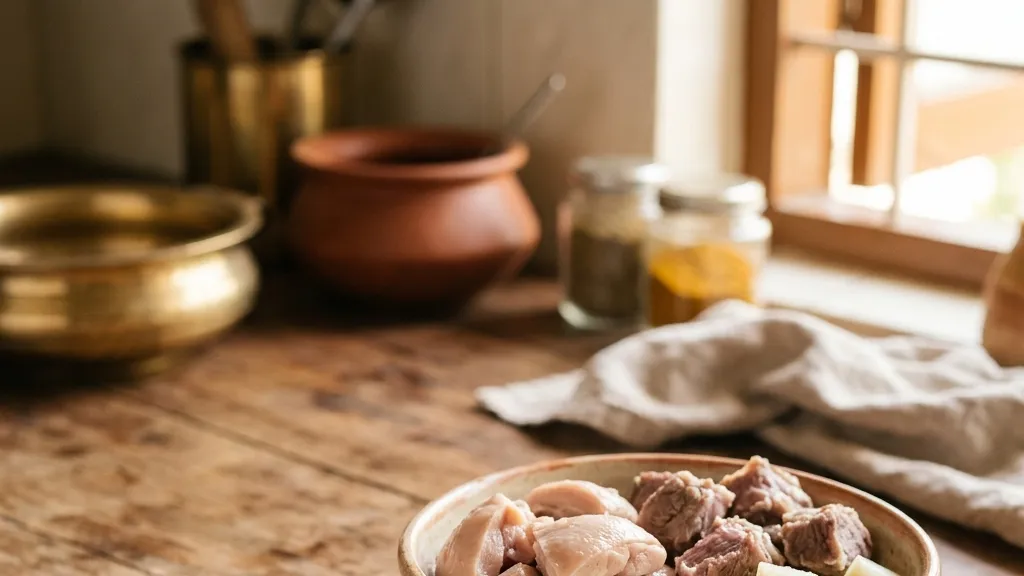
A batch of chicken or mutton heart. Eight minutes. Cool it, bag it, freeze it, and thaw a handful as you need them.
Heart is muscle, not organ — which matters, because organ meat is one of the things we ask you to keep out of a corrected bowl. Heart is not organ in that sense. It is lean muscle, it is high in taurine, and animals will do a great deal for it.
One batch lasts weeks. An air fryer that does this costs less than a year of shop-bought training treats.
Bone broth, in the pressure cooker
Bones, feet and necks. Two to three hours under pressure. You will have better broth than anything sold in a jar, and you will know exactly what went into it.
Cool it, skim the fat, freeze it in cubes. A spoonful over a bowl is a reward in itself, and it is genuinely useful for an animal that is off its food — a sick dog that will not eat will often take broth.
And while we are here: bone broth is not the calcium source it is often sold as. Measured calcium in broth is a few milligrams per 100 ml, far below what the wellness copy implies. Make it for the hydration, the palatability and the pleasure. Do not make it expecting minerals.
The equipment maths
An air fryer and a pressure cooker each sit under around ₹10,000, and between them they replace a recurring cost with something you own. Add a vacuum sealer from around ₹1,200 and a chest freezer from around ₹10,000 and you have the whole batch-cooking setup.
The money currently leaking out as shop-bought treats and convenience food buys that equipment inside a year, and then keeps paying. Our founder runs both the freezer and the air fryer for his own cats.
The full weekly rhythm is here — buying, portioning, freezing, thawing, and the one rule about never mixing the correction sachet into a batch.
One last thing about portions
If you are handing out a lot of heart during a training week, it counts. Not in a way that requires arithmetic — the system carries a 10% energy buffer and meat varies ±25–30% cut to cut anyway — but in the sense that you should be watching your animal’s condition over weeks rather than trusting any number, including ours.
Body condition is the feedback loop. The chart is only the starting point.
Related reading
- Batch cooking: the full weekly rhythm
- Can I feed kibble and fresh food together?
- Do I have to follow your feeding chart exactly?
- Replacing curd in the bowl
- Eggs for dogs
- Weight loss for an overweight dog or cat
- Why “complete and balanced” depends on how much your pet eats
- Free bowl checker
- Can dogs and cats eat liver?
- Can dogs and cats eat bone or egg shells for calcium?