
Can dogs and cats eat bone or egg shells for calcium?
Published · 3 min read
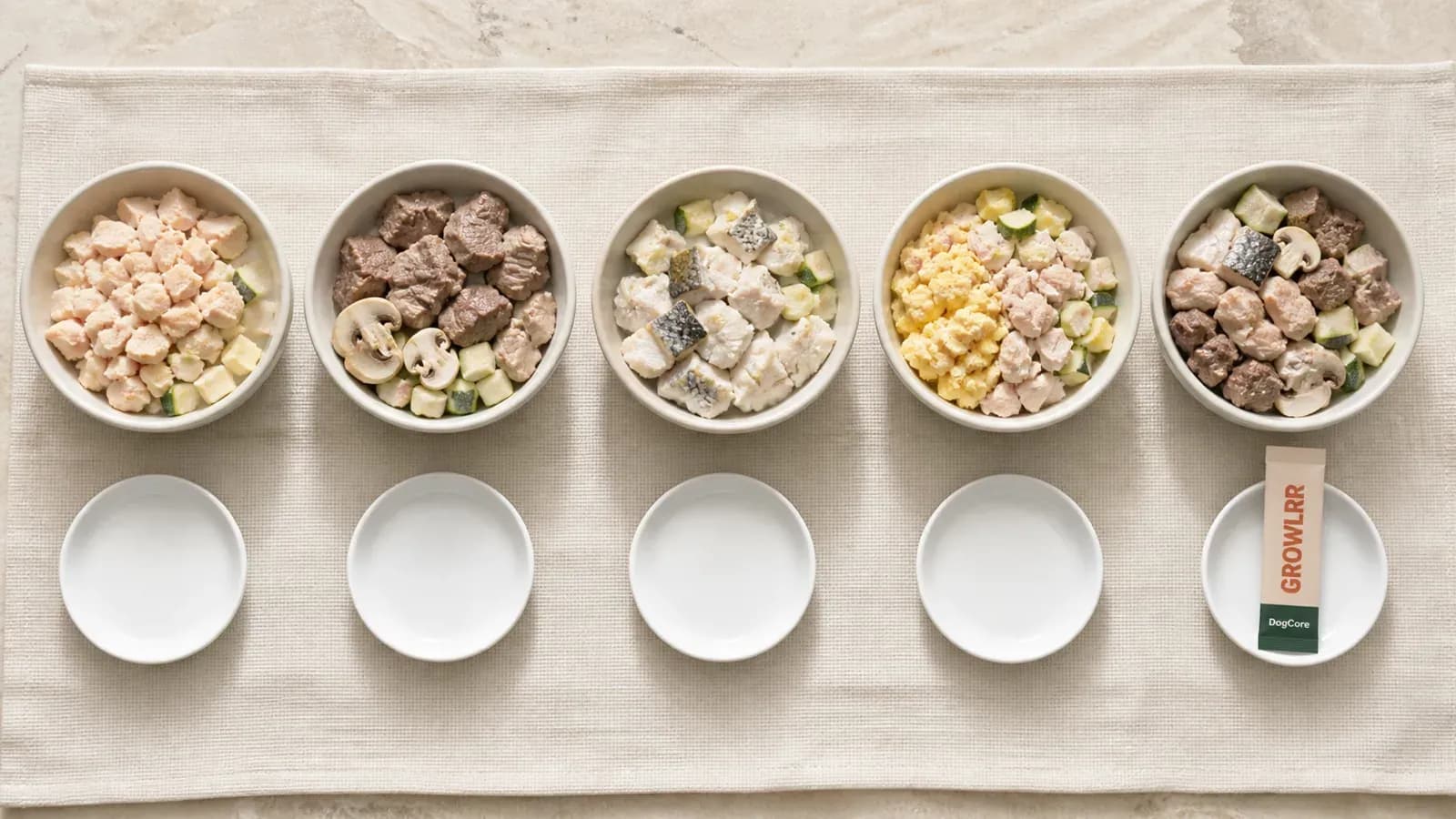
Almost everyone who cooks for their animal arrives at calcium eventually, because it is the one thing a meat bowl cannot supply. We have written the full calcium picture separately; this page is the narrower question of whether the two home sources work.
Why a home bowl needs calcium at all
Muscle meat is calcium-poor and phosphorus-heavy. That combination is the single biggest reason a home-cooked bowl is not complete: it is not only short of calcium, it is short of calcium relative to phosphorus, and the ratio between them matters as much as the amount.
A bowl of chicken, mutton and fish can run at roughly one part calcium to fifteen parts phosphorus. The target is between one and two parts calcium to one of phosphorus. That is not a small correction.
Egg shell — yes, and here is the method
Wondering how this applies to your own pet? Build their bowl — two minutes, and it gives the exact grams for their weight.
Egg shell is around 95% calcium carbonate. One average shell yields roughly 2 g of powder carrying somewhere near 750–800 mg of elemental calcium, though shells vary and that is an estimate rather than a specification.
Method, and the steps are not optional: wash the shells, boil them for ten minutes (salmonella lives on the outside of an egg, not the inside), dry them completely — a low oven is easiest — and grind to a fine powder in a clean coffee or spice grinder. Fine means fine. Coarse fragments are sharp and are a different ingredient altogether.
And the egg itself is worth feeding on its own merits.
Bone — no, and the reasons are separate
Cooked bone is categorically out. Cooking dries bone and changes how it fractures: it splinters into sharp shards. This is not a controversial position and there is no version of it that is safe, including bones that have been pressure-cooked soft.
Raw bone is where people disagree, and we come down against it. Raw bone does not splinter the same way, which is the honest case for it. It still carries slab fractures of the carnassial teeth, choking, obstruction, and perforation. The raw and BARF case in India covers the wider argument.
Our position is that the benefit — calcium, plus the dental and enrichment argument — is available by other routes, and the downside is a surgical one. We specify a boneless, cooked bowl and correct the calcium deliberately.
Related and worth knowing: bone broth is a fine thing to make and is not a calcium source — a few milligrams per 100 ml, far below what the wellness copy implies. Strain it and discard the solids.
The ratio nobody mentions
Here is the part that makes home calcium correction harder than it looks. You are not trying to hit a calcium number. You are trying to hit a ratio — and the ratio moves every time the meat does.
More mutton and less chicken changes the phosphorus. A fattier cut changes the calories, which changes the portion, which changes everything per kilogram. So a fixed "half a teaspoon of egg shell per day" is right for exactly one bowl and approximate for every other.
That is the argument for a dosed correction rather than a kitchen one, and it is also an argument for not pretending the kitchen version is worthless. If you are doing it by hand, do it by hand knowingly — and run the result through the free checker to see where you land.