
My dog is lactose intolerant and curd is a big part of the bowl — what now?
Published · 5 min read
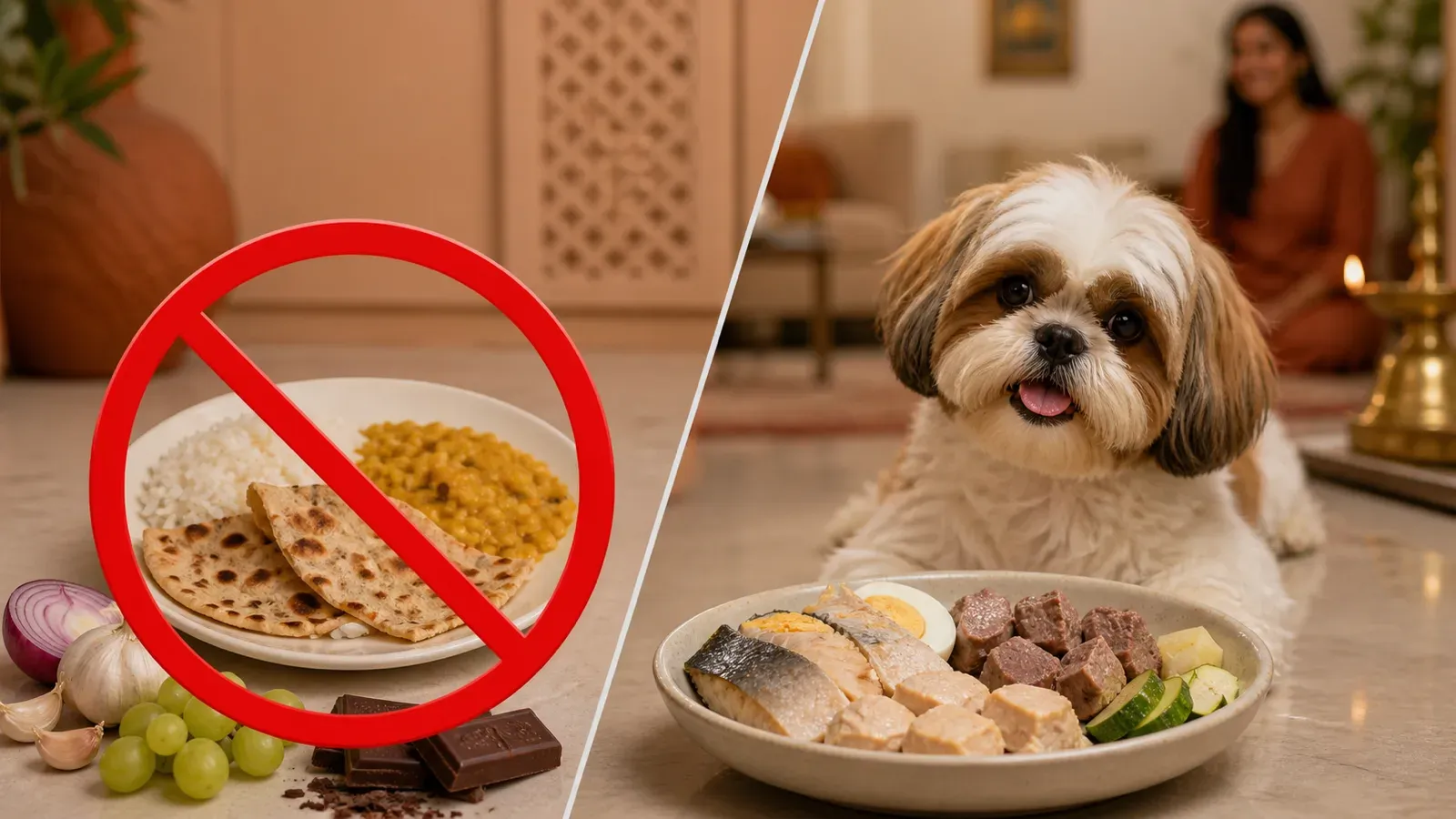
Curd sits at about 15% of the dog bowl — the dairy question in an Indian bowl is its own topic — and when someone tells us their dog cannot have dairy, the first thing they want to know is how big a hole that leaves.
Shorter answer than you would expect: not a big one. But let us do this properly, because there are two separate questions tangled up in it.
What curd is actually doing in there
It is carrying several jobs at once — hydration, satiety, good-quality protein, energy and fat, calcium, a spread of vitamins, and a live probiotic culture.
It earns its place by doing all of that cheaply, and because dogs like it. But not one of those jobs is irreplaceable, and that matters for what follows.
First: it may not be a problem at all
Wondering how this applies to your own pet? Build their bowl — two minutes, and it gives the exact grams for their weight.
Curd is not milk. Fermentation consumes a large share of the lactose before it ever reaches the bowl, and the live cultures carry their own lactase, which keeps working in the gut. A dog that reacts badly to a saucer of milk very often handles curd without any trouble at all.
It is also worth saying plainly: most adult dogs produce less lactase than puppies do. That is ordinary mammalian biology, not a disorder, and it does not mean dairy is off the table.
If it really is an intolerance
No single ingredient replaces everything curd was doing, so the right swap depends on which part you care about most.
Paneer
Protein, calcium and fat. Very low in lactose — most of it drains away with the whey — so it is usually the simplest swap and the one to try first. More on paneer for dogs here.
Kefir
Lower in lactose than curd and with more diverse cultures. If what you valued was the probiotic function, this is the one that keeps it.
Canned sardines, or pressure-cooked anchovies
Protein, calcium and omega-3. These are whole small fish eaten with the bones — pressure cooking softens them and canning has already done it. That makes them a genuine calcium source rather than a notional one. Prefer tins in spring water over sunflower oil, and rinse if they are salted.
Bone broth, from goat feet and marrow
Hydration, satiety and palatability, and it is excellent for a fussy eater or an animal that is off its food.
Chicken
Protein, energy, fat. Nothing else. Perfectly fine if the protein and calories were all you were after.
The distinction that changes the answer
Lactose intolerance and a dairy protein allergy are different things, and people use the words interchangeably.
If the problem is lactose, paneer and kefir are good answers precisely because both are low in it. If your dog reacts to the dairy protein rather than the sugar, both of those are the wrong answer and you want the fish or the broth instead.
If you are not sure which you are dealing with, your vet can tell you, and it is worth knowing before you spend three weeks on the wrong substitute. The foods most often behind a dog’s itch is the related read if a skin reaction is what started this.
A note on why we suggest sardines here when our bowl specifies tilapia
Fair question, and the answer is dull: availability, not nutrition.
The standard bowl specifies farmed fish — tilapia — because it can reliably be bought across the country all year round, including in cities nowhere near a coast. India has large landlocked populations and that matters more than it sounds. It is a supply-chain decision.
Sardines and anchovies are nutritionally excellent — as is most of the safe-fish list. They are simply less dependable to buy. Once you already have a second constraint to work around, dependability is the thing worth trading away.
And you will not get it exactly right
That is alright, and we would rather say so than pretend otherwise.
Our system already runs calcium above NRC requirement by a useful margin, chiefly to offset how phosphorus-heavy muscle meat is. There is headroom. Adding whole small fish on top is an approximation rather than a calculation, and done in moderation and with some thought it will not harm your dog.
What we cannot do is guarantee the calcium-to-phosphorus balance once ingredients we did not specify start going in. So keep the substitution modest and consistent rather than enthusiastic — and once you have swapped, run the bowl through the free checker and see where it lands.
Related reading
- Curd rice for dogs: when it helps and when it does not
- Can dogs eat paneer?
- Can dogs and cats eat crab and shrimp?
- The best fresh proteins for dogs and cats in India
- Do I have to follow your feeding chart exactly?
- Make your own treats, including bone broth
- What you can change in the bowl, and what you cannot
- Free bowl checker
- My pet refuses the sachet — what to do