
Cats · The feeding hub
What should I feed my cat?
Cats deserve the same care in feeding that dogs get, but their needs are their own — obligate carnivores with a low thirst drive and a taurine requirement. This is the map for a cat’s whole life: pick the life stage, follow it to the answer, then let the tools complete a home bowl. Dogs have their own hub.
Short answer
What should I feed my cat?
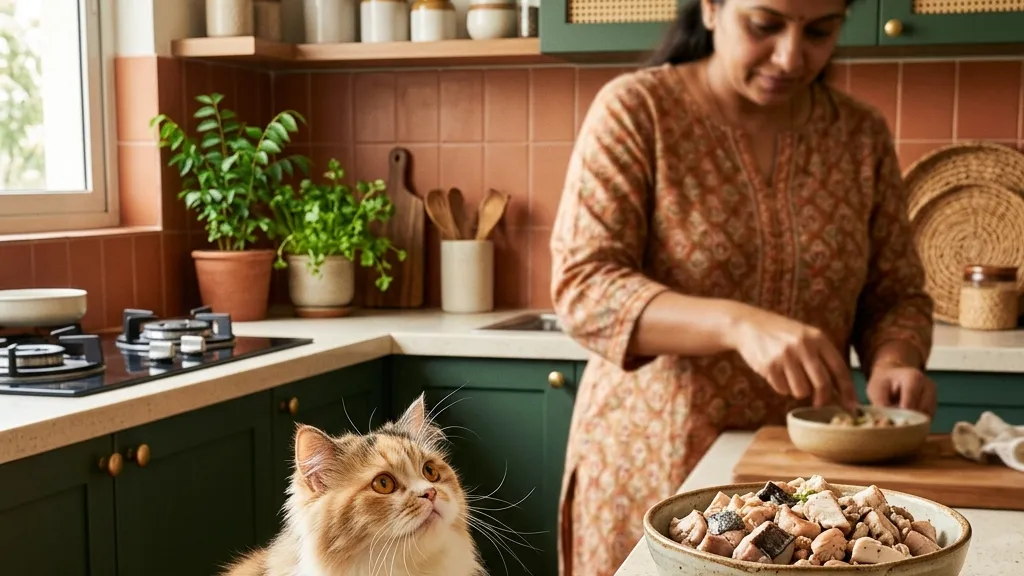
Feed your cat a fresh, high-moisture meat bowl — chicken, lean fish like tilapia, and egg — sized to its weight and life stage. Cats are obligate carnivores (they must eat animal tissue) and need dietary taurine, which they cannot make. A plain meat bowl still misses taurine, calcium balance, iodine and some vitamins; weight-dosed Growlrr BowlBalancer™ CatCore™ sachets (4–8 a day, by your cat's weight) complete it to the NRC 2006 standard (the international nutrient reference vets and nutritionists use).
What it depends on
- Taurine — cats cannot make their own taurine and go blind or develop heart disease without enough in the diet; a home bowl must supply it deliberately.
- Moisture — cats are desert-origin animals with a low thirst drive, so a high-moisture fresh or wet bowl matters, especially in Indian summers.
- Life stage — a growing kitten needs more calcium, phosphorus, protein and DHA than an adult, and many senior cats need more calories, not fewer.
- Body weight — the daily energy need, and therefore the amount of every nutrient, scales with how big your cat is.
Common questions
Is home-cooked food good for cats?
Yes, provided it is complete. A fresh, high-moisture meat bowl gives a cat the animal protein and water it is built for. But cats are obligate carnivores with a strict taurine requirement, so a plain home bowl is riskier than a dog’s if it is not balanced: it can be short on taurine, calcium relative to phosphorus, iodine and several vitamins. It becomes complete when those gaps are corrected to the NRC 2006 nutrient floors.
Why do cats need taurine, and can homemade food provide it?
Taurine is an essential amino acid for cats — unlike dogs, they cannot make enough of their own, and a deficiency causes blindness and dilated cardiomyopathy (a serious heart disease). Taurine is found in animal tissue but is partly lost in cooking and water, so a home-cooked cat bowl needs taurine added deliberately, dosed to the cat, to stay safe.
What should I feed a kitten versus an adult cat?
A growing kitten is not a small adult cat: from weaning to about twelve months it needs more calcium, phosphorus and protein, DHA-forward omega-3 for brain and eye development, and taurine. Feed a dedicated growth formula (KittenPro™) through the growth window, then step down to adult maintenance (CatCore™) at around twelve months.
Why does moisture matter so much for cats?
Cats descend from desert wildcats and still have a low thirst drive, so they are not good at making up a shortfall by drinking. Chronic under-hydration — common on dry-only diets, and worse in Indian heat — concentrates the urine and is linked to a higher risk of feline lower urinary tract disease (FLUTD) and kidney strain. A high-moisture fresh or wet bowl gets water in with the meal.
By life stage
A cat’s bowl changes as it grows. Start where your cat is now.
New cat · the front door
Kitten
Just got a kitten? Start a complete feeding routine from day one. Growth needs more calcium, phosphorus, protein and DHA than an adult, plus taurine cats cannot make — size the bowl and reserve a KittenPro™ pack.
Start with a new kitten →Life stage · maintenance
Adult
A grown cat on a fresh, high-moisture meat bowl completed with one weight-dosed CatCore™ sachet. Sort the feeding decision first, then build the routine.
Adult feeding →Life stage · older cats
Senior
Older cats often need MORE calories, not fewer, as they lose lean muscle — the counter-intuitive one. High-quality protein with moderated phosphorus for ageing kidneys.
Feeding a senior cat →Life stage · pregnant & nursing
Reproduction & nursing
Gestation and lactation have their own dedicated formula — CatPro-L™ for queens. The most energy-demanding stage a cat goes through.
Reproduction feeding →Context · by breed
Breeds
Where breed changes a cat’s feeding, and where it does not. Every cat, pedigree or Indian domestic shorthair, is an obligate carnivore first.
Feeding by breed →The homemade-cat-food pillar
Pillar guide
Homemade cat food — is it good & complete?
Read the guide →Cat-feeding questions, answered
The everyday questions cat parents actually ask — plainly answered, then linked to the tools.
“But is my cat’s bowl actually complete?”
That is the question every fresh feeder eventually asks. Read what “complete and balanced” means , then check or build your cat’s bowl. Sachet prices are on the pricing page.