
My cat won’t eat — what to do, and what not to do
Published · 4 min read
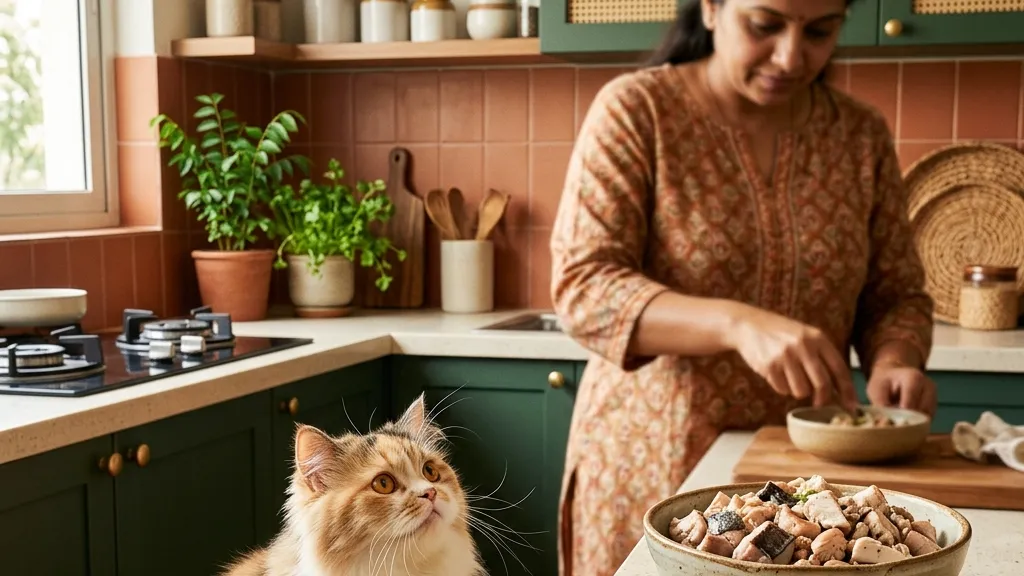
This is the one page on this site where the advice is mostly "stop, and call someone". We would rather write it plainly than have it buried in a feeding guide.
Why a cat is different from a dog here
A dog that skips a day is usually fine. A cat is not a small dog, and the reason is metabolic.
When a cat stops eating, the body mobilises fat to the liver for energy. A cat's liver is comparatively poor at processing that load, so the fat accumulates in the liver cells faster than it can be moved out. The result is hepatic lipidosis — fatty liver disease — and it can begin within a few days of not eating.
The timeline, plainly
Wondering how this applies to your own pet? Build their bowl — two minutes, and it gives the exact grams for their weight.
- One missed meal — usually nothing. Cats are grazers and days vary.
- 24 hours with nothing at all — call your vet. Not an emergency yet, but it is the point at which "wait and see" stops being the right call.
- 48 hours — this is a veterinary problem now, whatever started it.
- Eating much less than usual for several days — counts. Partial anorexia does the same thing more slowly, and it is easier to miss.
What usually causes it
Most of the time, refusal is a symptom rather than a preference. Dental pain is enormously under-diagnosed and a cat with a painful tooth will sit at the bowl and not eat. Nausea, kidney disease, pancreatitis, a blocked nose from a mild infection — a cat that cannot smell food will not eat it — and several things that get mistaken for fussiness.
Genuine food refusal — the cat is well, and simply does not want that — is the smaller category, and it is usually about novelty. Cats are neophobic: an unfamiliar food is a risk, and caution is an instinct rather than an attitude. A cat that was weaned onto one texture often treats everything else as not-food for a while.
What actually helps, when the cat is otherwise well
Warm the food to body temperature. The biggest single lever. Aroma drives feline appetite and cold food has almost none.
Check the bowl, not the food. Shallow and wide, so the whiskers are not pressed. Away from the wall, so nothing can approach from behind. Away from the litter tray — further than you think. Not beside a noisy appliance.
Go slower than feels reasonable. A cat transition should take two to three weeks, not the week a dog takes. Go back a step the moment it stalls.
Try a topper, not a swap. A spoon of warm unsalted bone broth, or a little of the water from poached fish, over the food they are already refusing. You are adding aroma rather than changing the meal.
Leave them alone. Many cats will not eat while watched. Put it down, walk away, come back in twenty minutes.
Feed little and often. A cat's natural pattern is many small meals — ten or more a day in a hunting cat. One large bowl is our convention, not theirs.
What not to do
Do not withhold food to force acceptance. This is standard dog advice and it is dangerous in a cat. It is the single most important line on this page.
Do not keep changing the food. A cat offered a new flavour every day learns that refusing produces a better offer, and you lose the ability to tell refusal from illness.
Do not give human appetite remedies, or any medication not prescribed for that cat. Several common human drugs are seriously toxic to cats.
Do not assume an older cat is "just slowing down". An ageing cat that eats less needs more energy density, not fewer calories, and a drop in appetite in a senior cat is information.
And where we fit
Honestly: we do not solve fussiness, and we would rather say so. Growlrr corrects the nutrition of a bowl a cat is already eating. If your cat is refusing food, that is a veterinary question first and a nutrition question second.
What we would ask is that you never fast a cat into a diet change on our account. If a switch to fresh food is not being accepted, go back a step, go slower, and take three weeks if it takes three weeks. Our transition guidance says exactly that, and it is not a formality.