Is raw dog food good for dogs in India? An honest answer
Why raw feeding feels right — and what it gets right
Dogs are carnivore-built. Meat-first feeding, organ meats and bone-derived calcium answer real problems with cereal-first kibble — and peer-reviewed digestibility studies back the felt difference: fresh and raw diets deliver more usable protein per gram than equivalent extruded dry food. If you are researching raw, your instinct is sound. Keep it.
The safety question, in Indian conditions
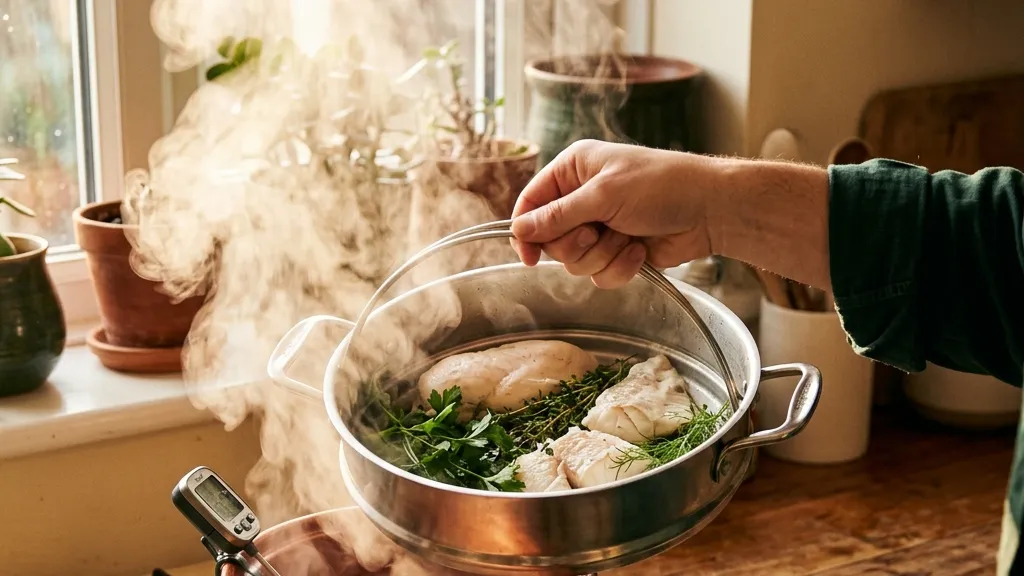
Raw meat carries Salmonella, E. coli and antimicrobial-resistant bacteria often enough that the AVMA and the FDA both advise against feeding it — for the pet’s sake and for the humans in the kitchen. A frozen chain that survives a Norwegian winter meets a different reality in an Indian May, in transit, and in a domestic freezer through power cuts. Gentle cooking removes the pathogen problem entirely while keeping fresh food’s digestibility advantage over kibble. You lose almost nothing that matters — and the one real cooking loss (thiamine) is precisely the kind of gap a measured correction restores.
The nutrition maths nobody prints
A wild carnivore eats a multiple of an apartment dog’s calories, from a menu of many species and tissues — and its minerals and vitamins arrive with that volume and variety. Your neutered, indoor dog eats a fraction of that, from one recipe, daily. Nutrient needs track the body; food arrives with the calories — shrink the calories and the same “natural” ratios come up short, reliably on the same few nutrients: manganese, vitamin E, vitamin D, iodine, and calcium balance if the bowl is boneless. This is why, read closely, almost every commercial raw or fresh food carries a nutrient premix — disclosed or otherwise. The ratios alone never finish the job at pet-sized calories.
Cooked + corrected: raw’s logic, without raw’s risks
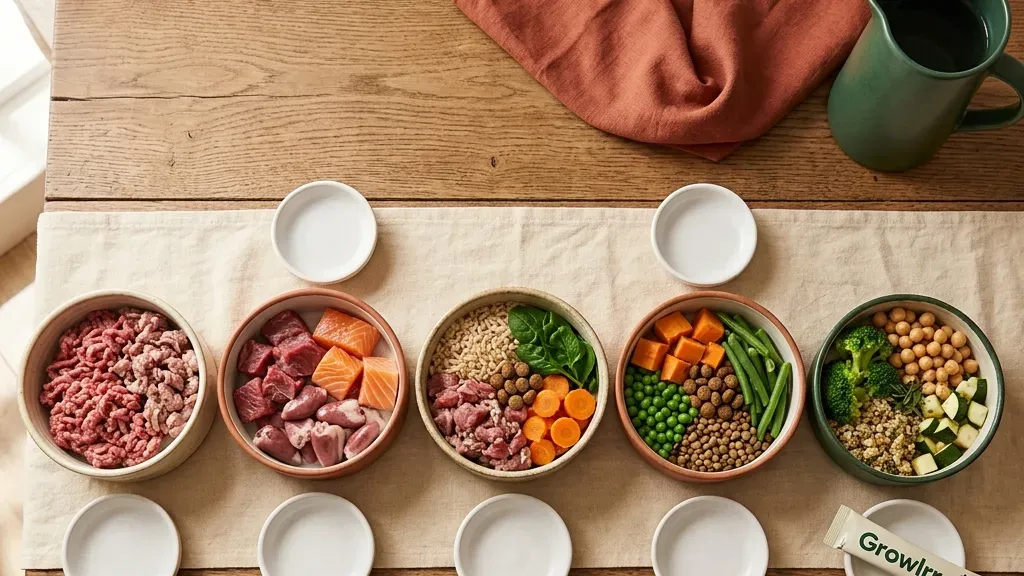
The BARC approach keeps everything raw feeders are right about — fresh, meat-first, biologically appropriate food — and changes the two failure points: the meat is gently cooked (pathogens gone), and one weight-dosed Growlrr BowlBalancer™ sachet residually corrects the bowl to every NRC 2006 floor — validated across 1 Million+ simulated feeding days (Wilson C/R 95/99), method published. You buy the meat from the shop you already trust; the sachet holds the maths. BARF is a good start. BARC is the right finish.
If you still choose raw: questions that protect your dog
- Complete to which named standard (NRC 2006 / AAFCO / FEDIAF), for which life stage?
- Where is the full analysis — manganese, vitamin E, iodine, thiamine, Ca:P — not just protein and fat?
- What is in the “nutrient blend”, exactly?
- What does the cold chain look like between their freezer and yours — and what happens in transit in May?
References
- American Veterinary Medical Association & U.S. FDA. Positions on raw or undercooked animal-source protein in cat and dog diets.
- Freeman LM, et al. Current knowledge about the risks and benefits of raw meat-based diets for dogs and cats. JAVMA. 2013;243(11):1549–1558.
- Geary EL, et al. J Anim Sci. 2023;101:skad377. (Digestibility of raw, fresh and extruded diets.)
- National Research Council (NRC). Nutrient Requirements of Dogs and Cats. 2006.
- Nowak L, et al. Nutritional secondary hyperparathyroidism after exclusive boneless raw-meat feeding: a case series. Animals. 2024;14(12):1783.
Build a fresh, complete bowl for your own dog →